Part 1 — Terms, trader types and risk management
The vocabulary, the four kinds of trader, and the risk rules that come before any chart. All 30 slides in the order the course teaches them — each one explained underneath.
Part 1 of the course. Five things get settled here before any chart appears: the words traders use, who else is in the market, the two directions a trade can take, how a position is sized, and the risk rules that decide whether any of it compounds.
Slide 1 of 30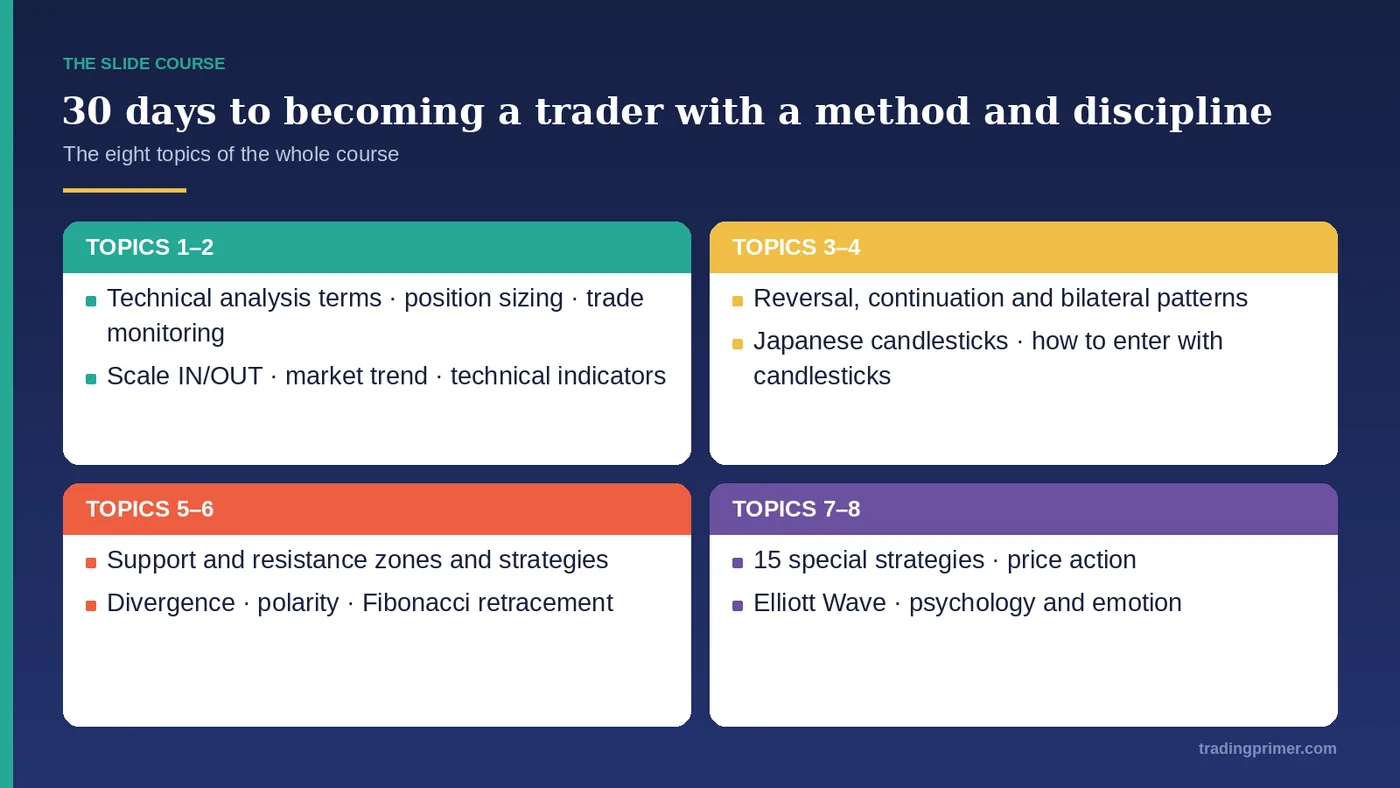
The whole course at a glance. Eight topics, taught in this order for a reason — vocabulary and risk come first, patterns and strategies later. Skipping ahead is how most people end up trading without a method.
Slide 2 of 30
What Part 1 delivers. By the end of these slides you can name every term the later parts use, place a stop for a stated reason, and work out how large a trade may be.
Slide 3 of 30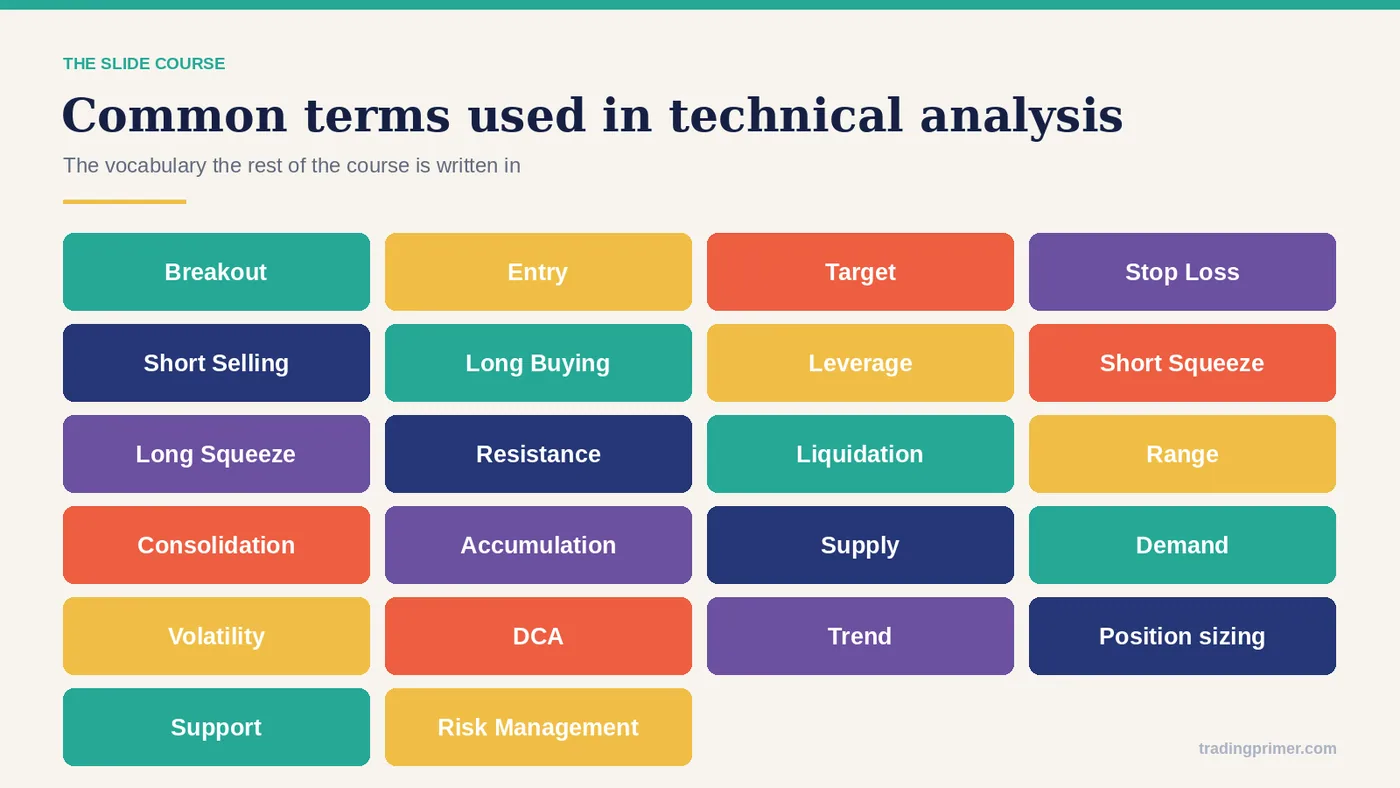
The vocabulary the rest of the course is written in. Twenty-two terms. You do not need to memorise them today — but every later slide assumes you recognise them, so come back to this one whenever a word stops you.
Slide 4 of 30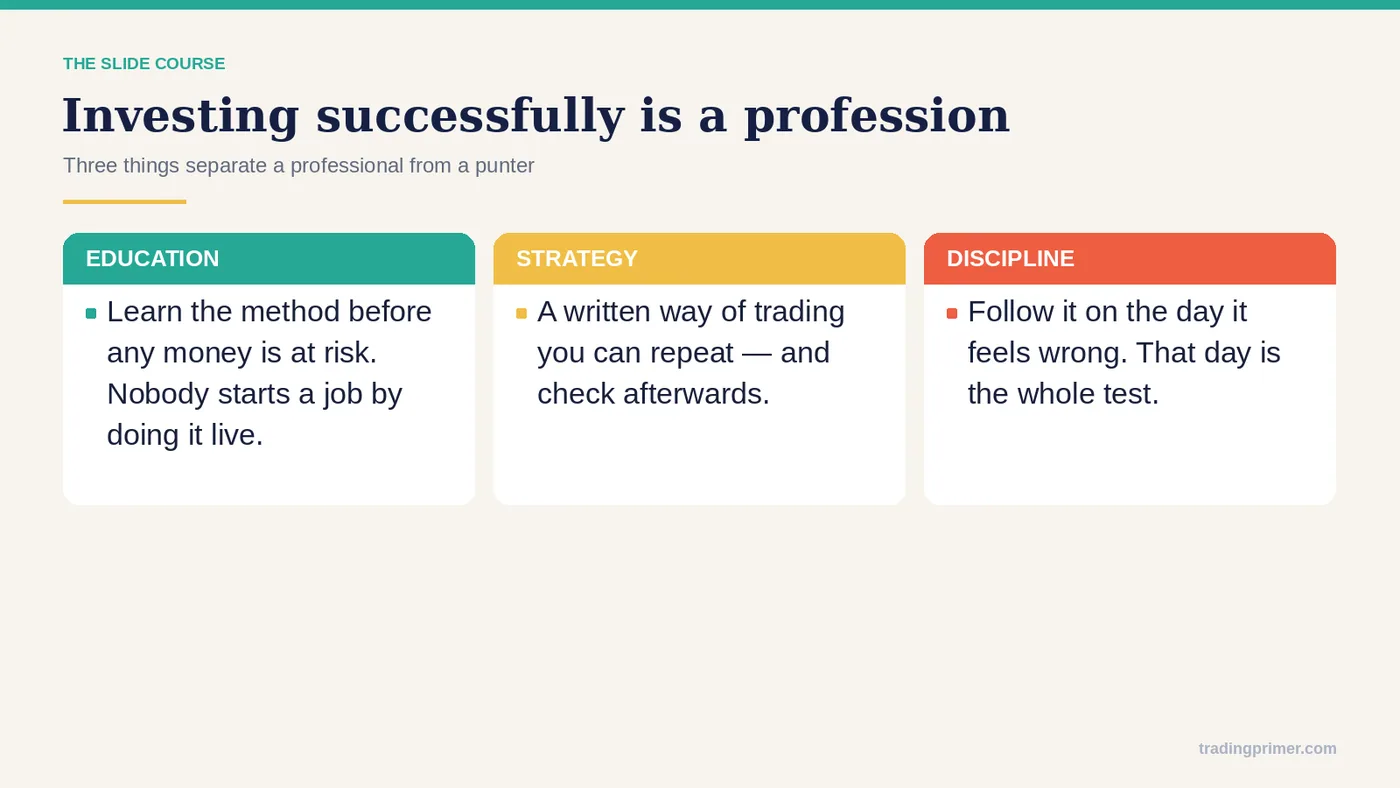
Education, strategy, discipline. The three together are what separate a profession from a hobby. Any one of them missing and the other two stop paying.
Slide 5 of 30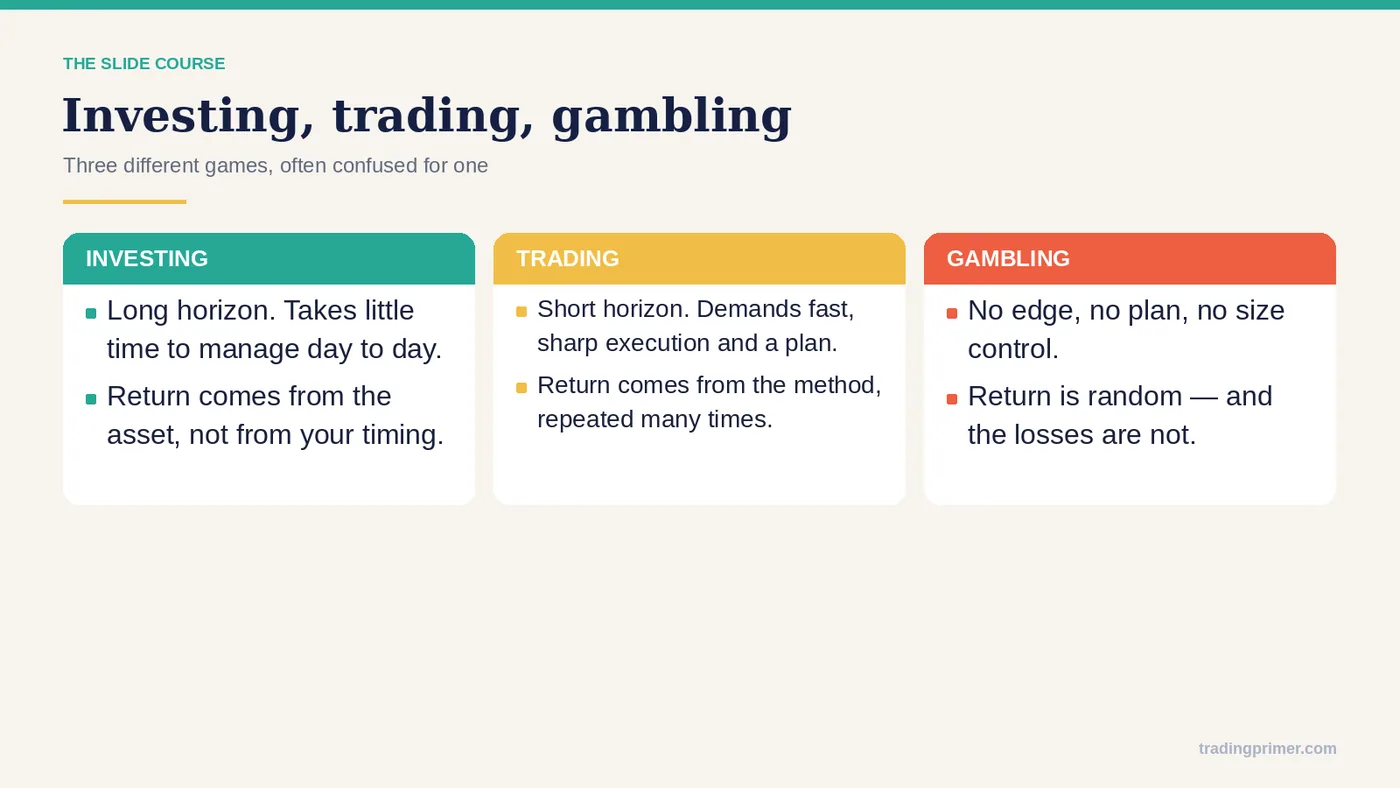
Three different games, often confused for one. Investing takes little time to manage; trading demands fast, sharp execution; gambling is simply risk with no method. Without a plan, trading quietly becomes the third.
Slide 6 of 30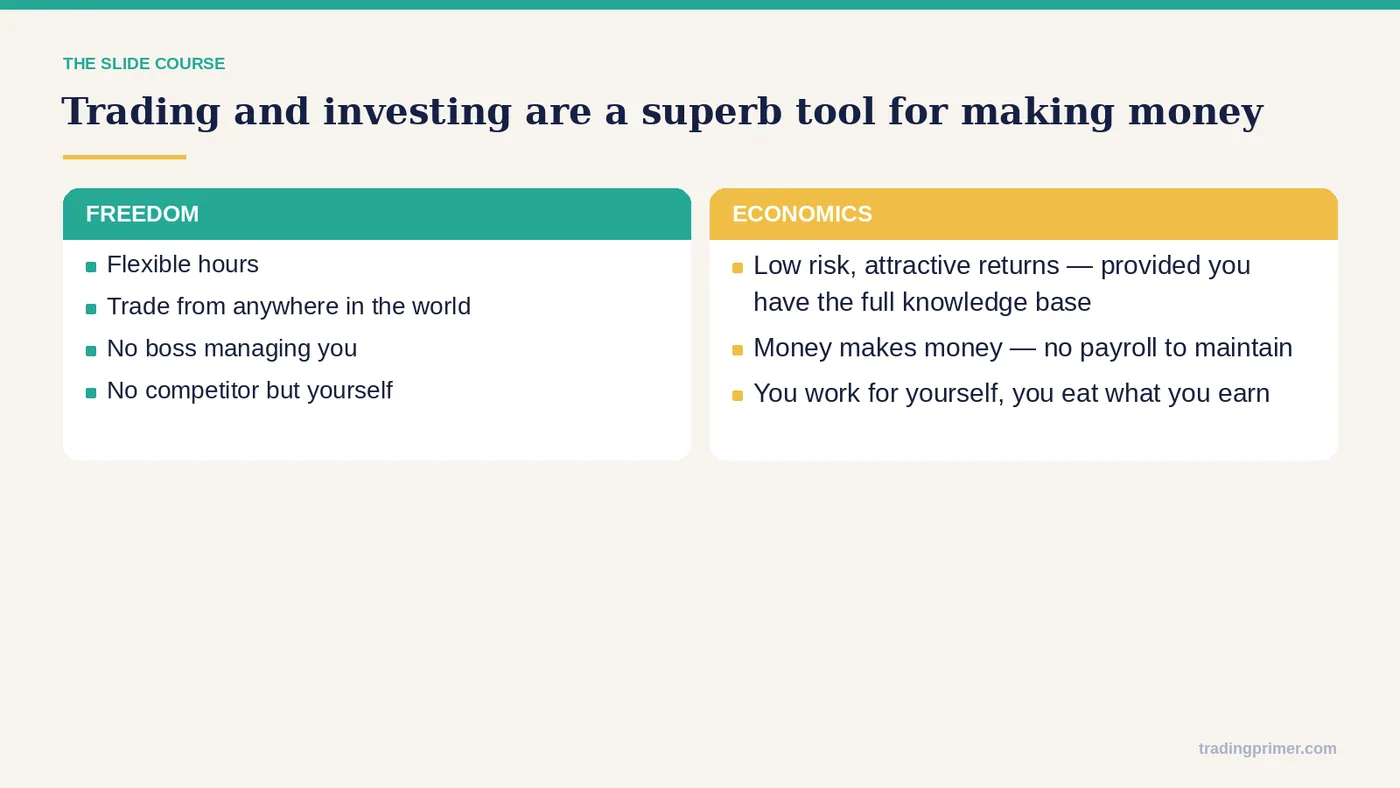
Why people take this up. Flexible hours, no boss, work from anywhere — and money that can compound without a payroll behind it. The catch sits in one line: provided you have the full knowledge base.
Slide 7 of 30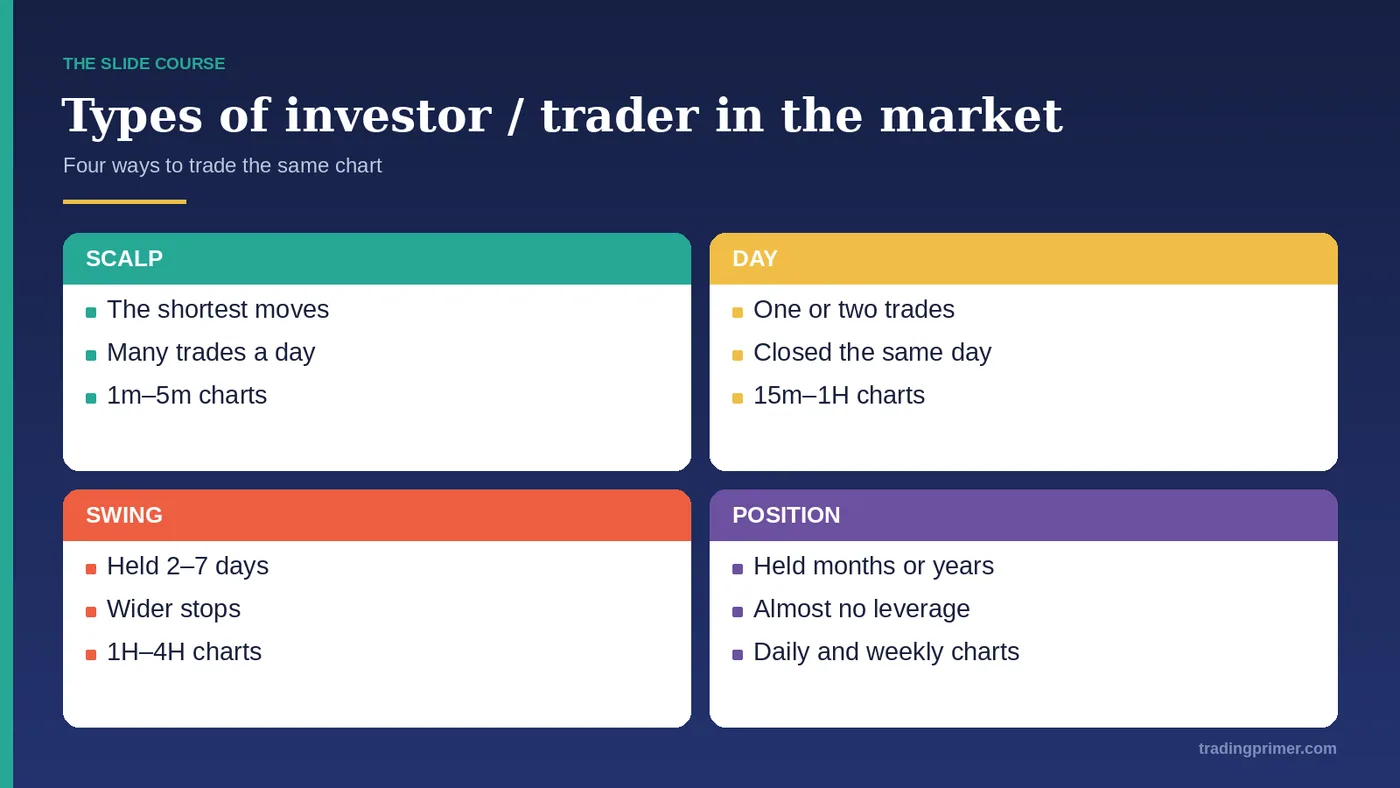
Four ways to trade the same chart. What separates them is holding time and leverage — not skill, and not how much anyone earns.
Slide 8 of 30 Tap to enlarge
Watch the clock speed change. The same price series, seen through four different holding periods. A scalper sees dozens of decisions where a position trader sees one.
Slide 9 of 30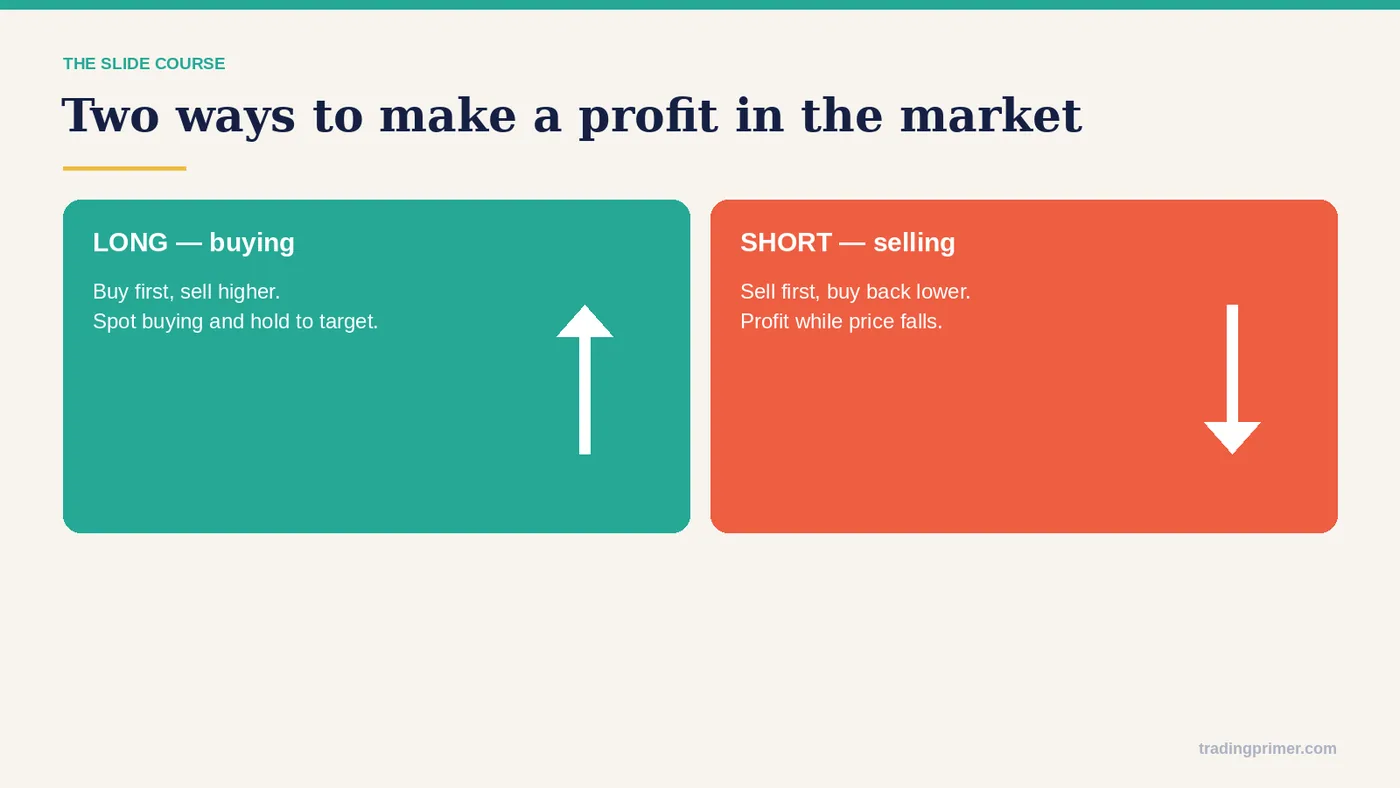
Two directions, not one. Long profits when price rises; short profits when it falls. Most beginners only ever learn the first, which halves the market they can work in.
Slide 10 of 30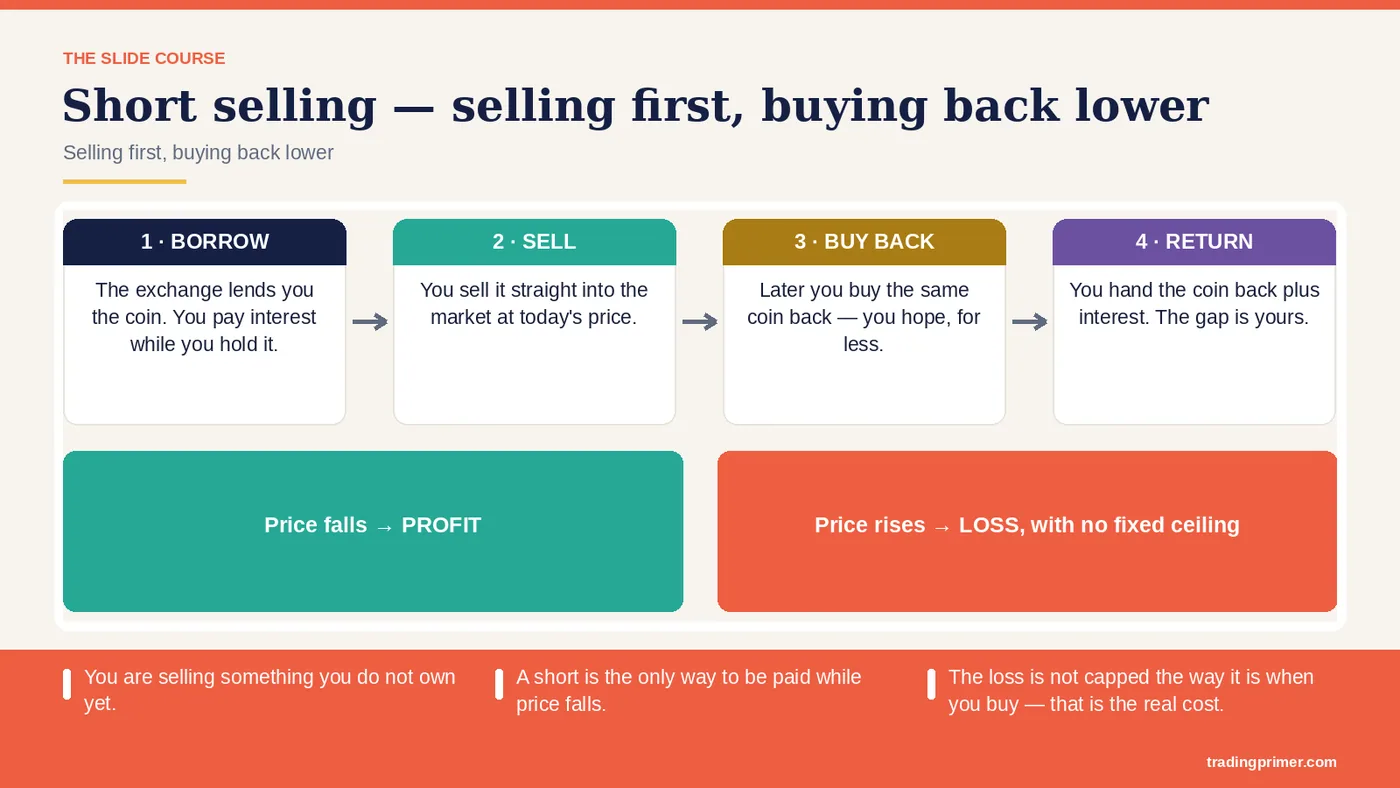
Short selling. Sell first, buy back lower, keep the difference. The danger is asymmetric: price can rise without limit, so the loss on a short is not capped the way it is on a purchase.
Slide 11 of 30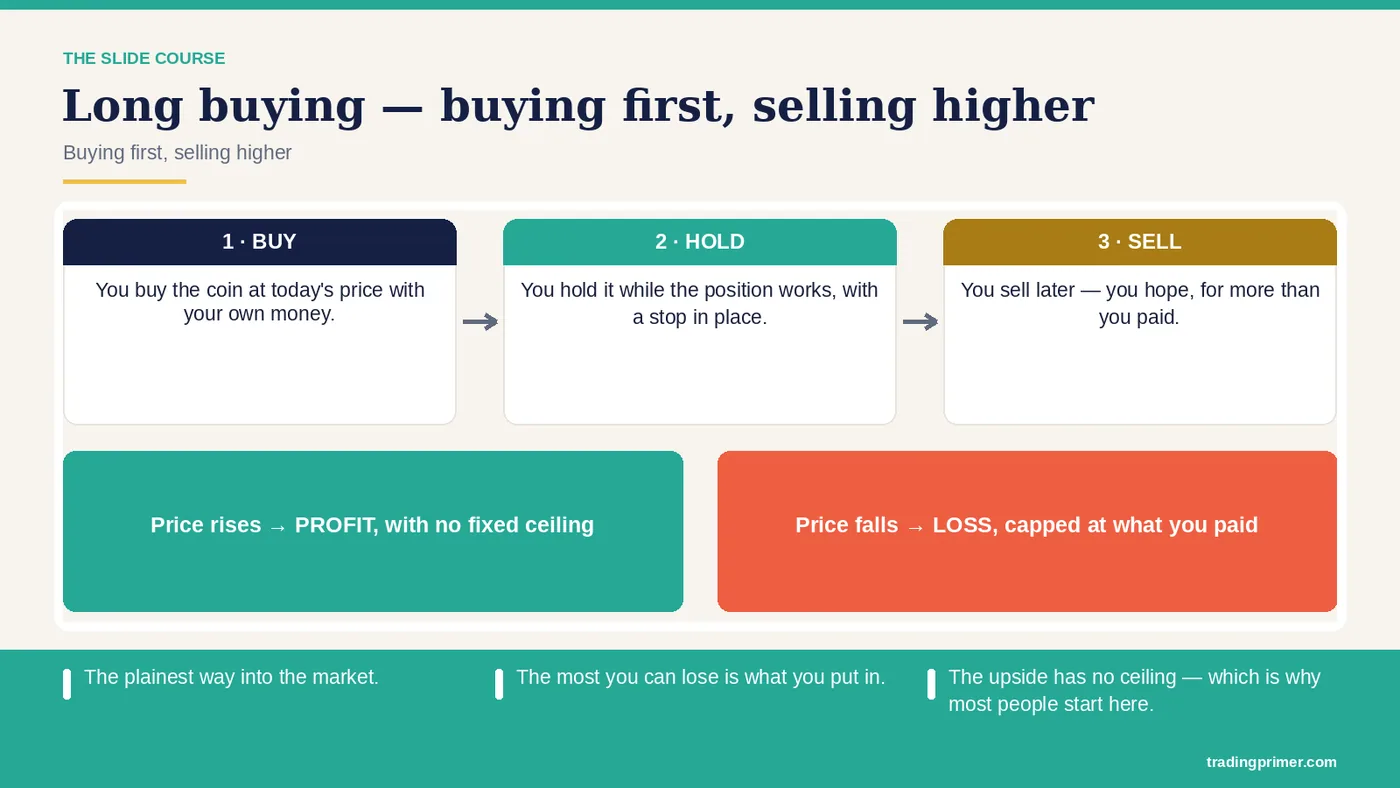
Long buying. Buy first, sell higher. The most that can be lost is what was paid, and the upside has no fixed ceiling — which is why this is the plainest way into the market.
Slide 12 of 30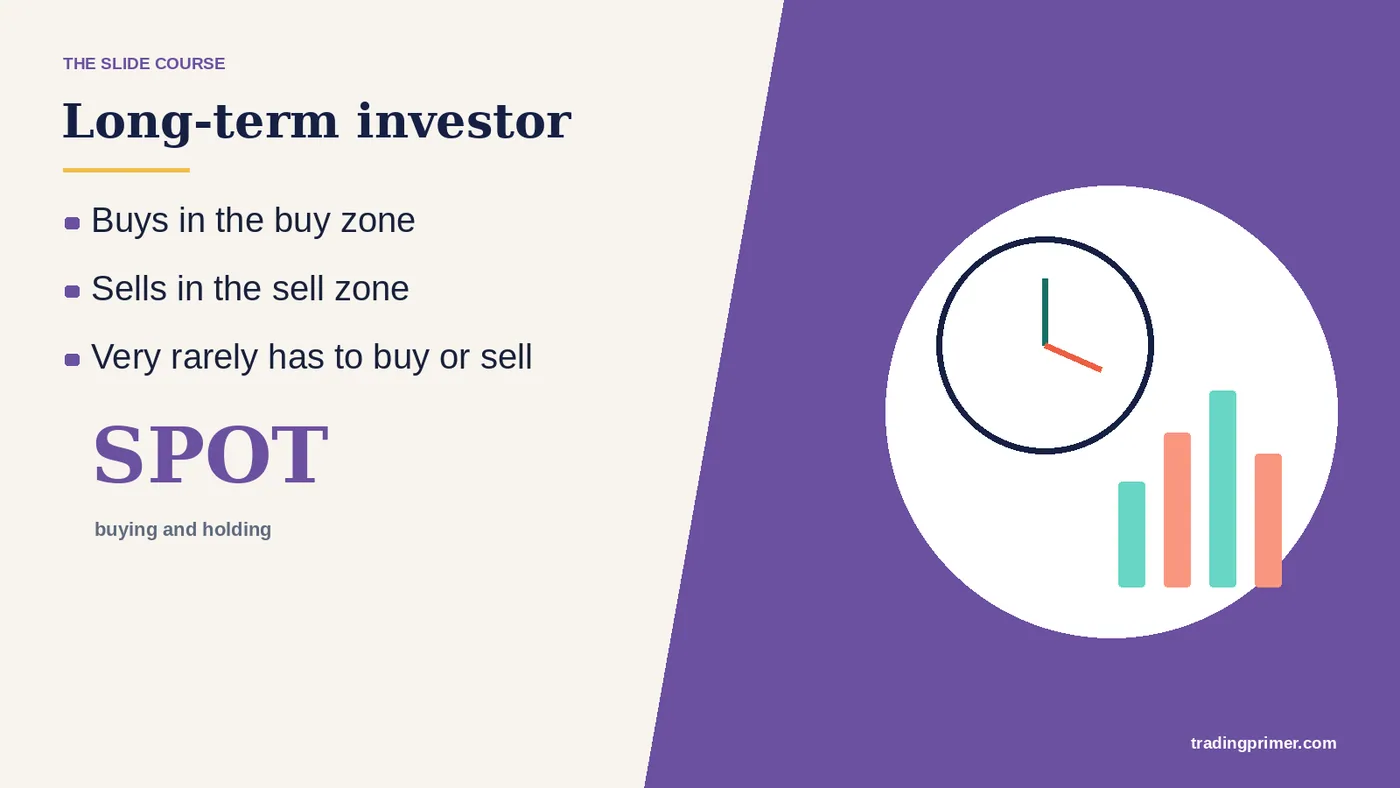
The long-term investor. Buys in the buy zone, sells in the sell zone, and rarely has to do anything in between. The hardest part is not the analysis — it is the waiting.
Slide 13 of 30
What risk management actually is. A method for limiting and protecting capital so that one trade, or a handful, cannot wipe it out. Risk itself can never be removed; the rules are what stay under your control.
Slide 14 of 30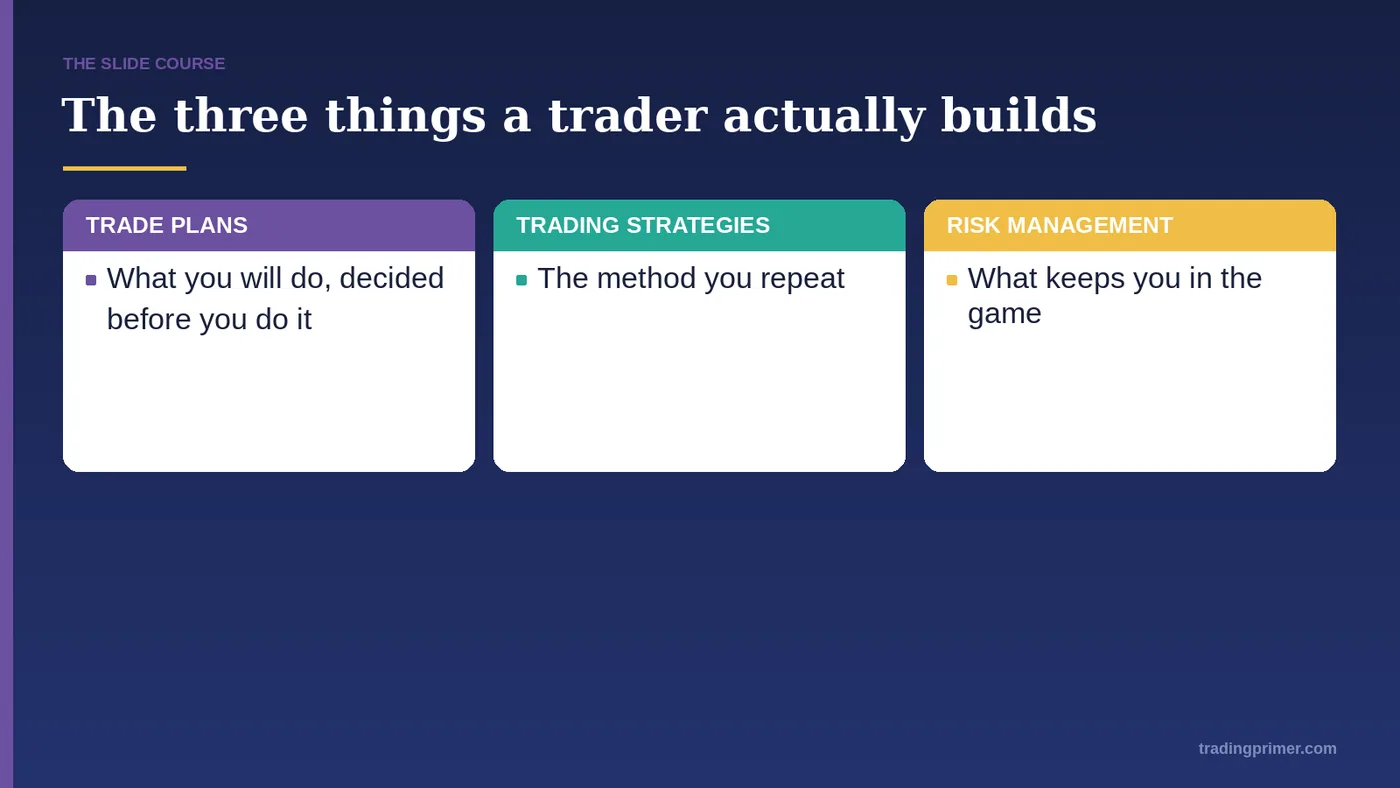
Three things a trader builds. A trade plan decides what you will do before you do it. A strategy is the method you repeat. Risk management is what keeps you in the game long enough for the first two to matter.
Slide 15 of 30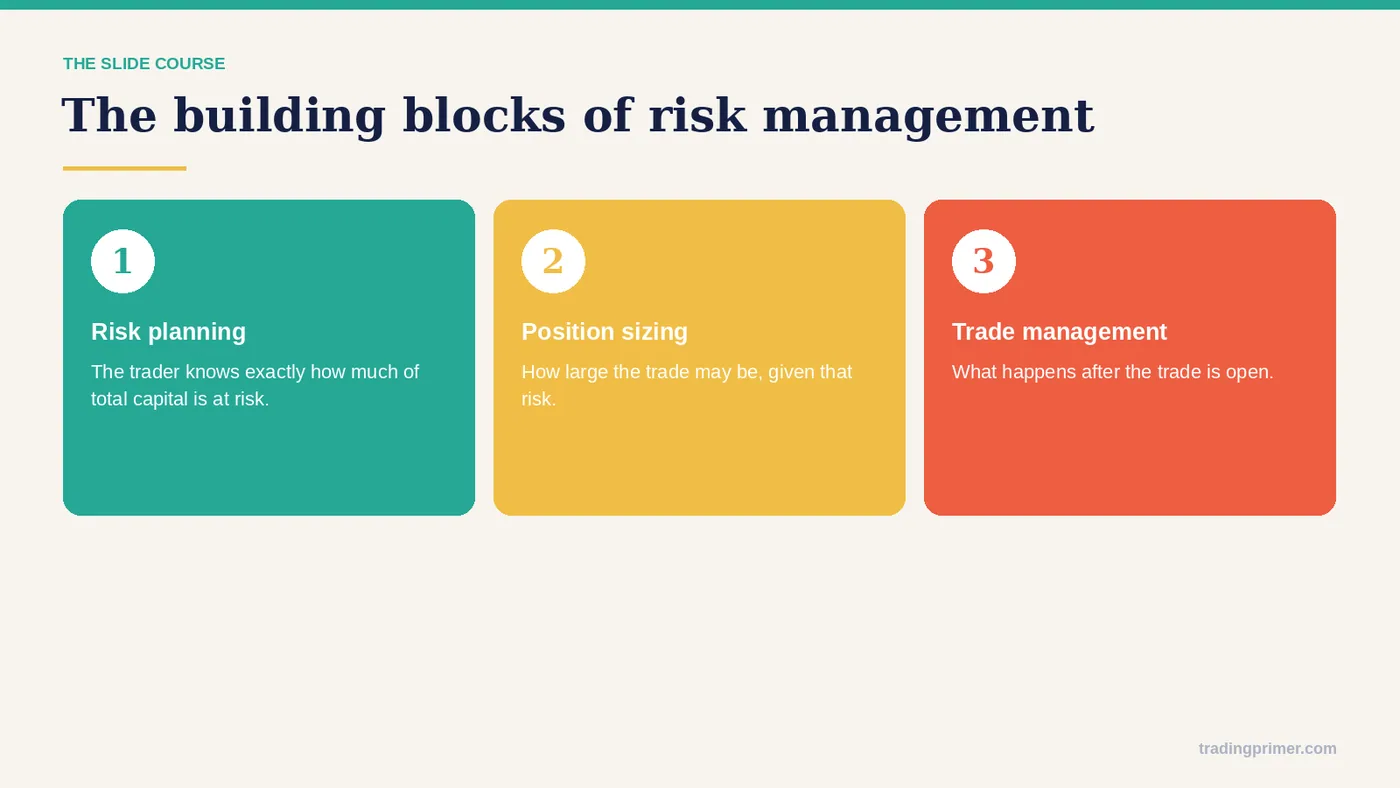
The three blocks, in order. Risk planning sets how much of total capital is exposed. Position sizing turns that into a trade size. Trade management is everything after the order is filled.
Slide 16 of 30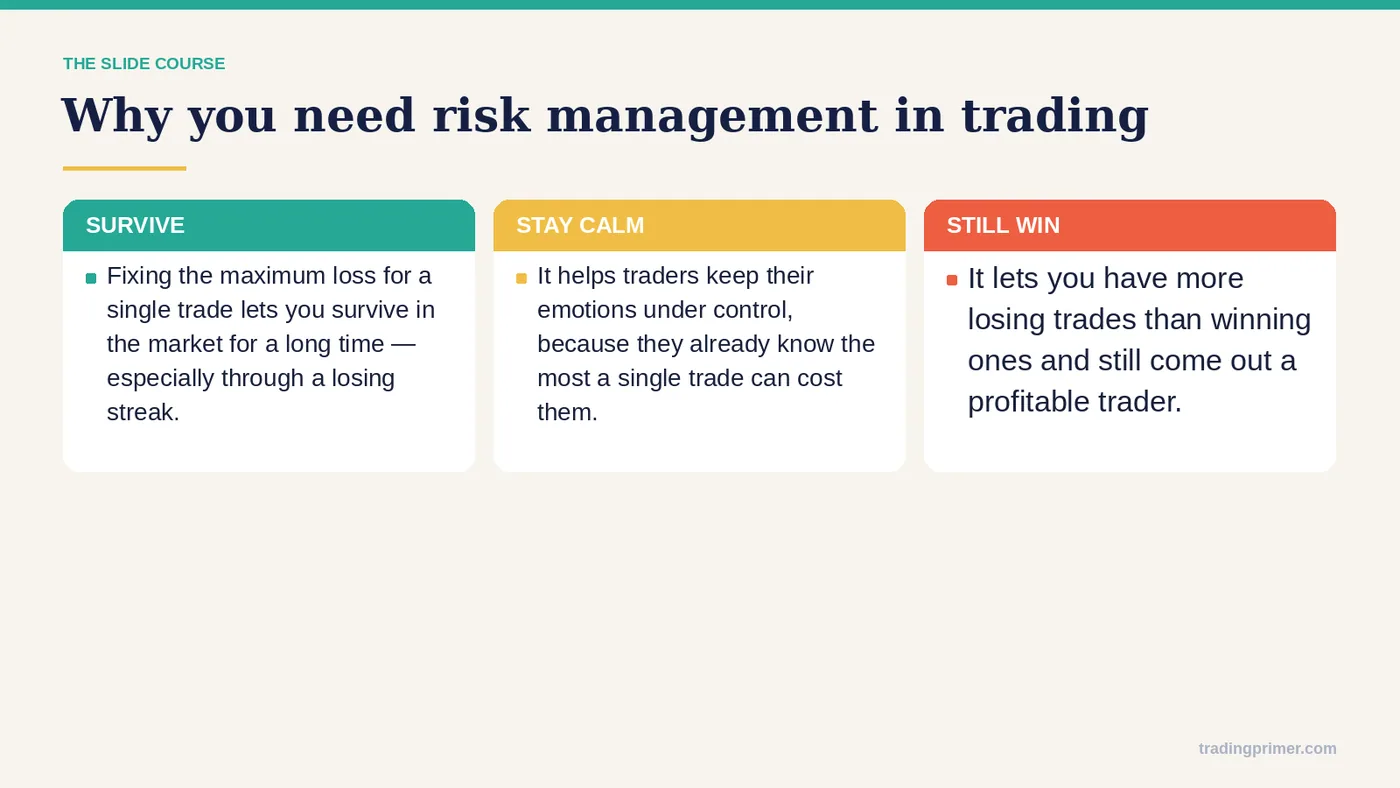
Three reasons it pays. You survive losing streaks, you keep emotions in check because the worst case is already known, and you can lose more trades than you win and still finish ahead.
Slide 17 of 30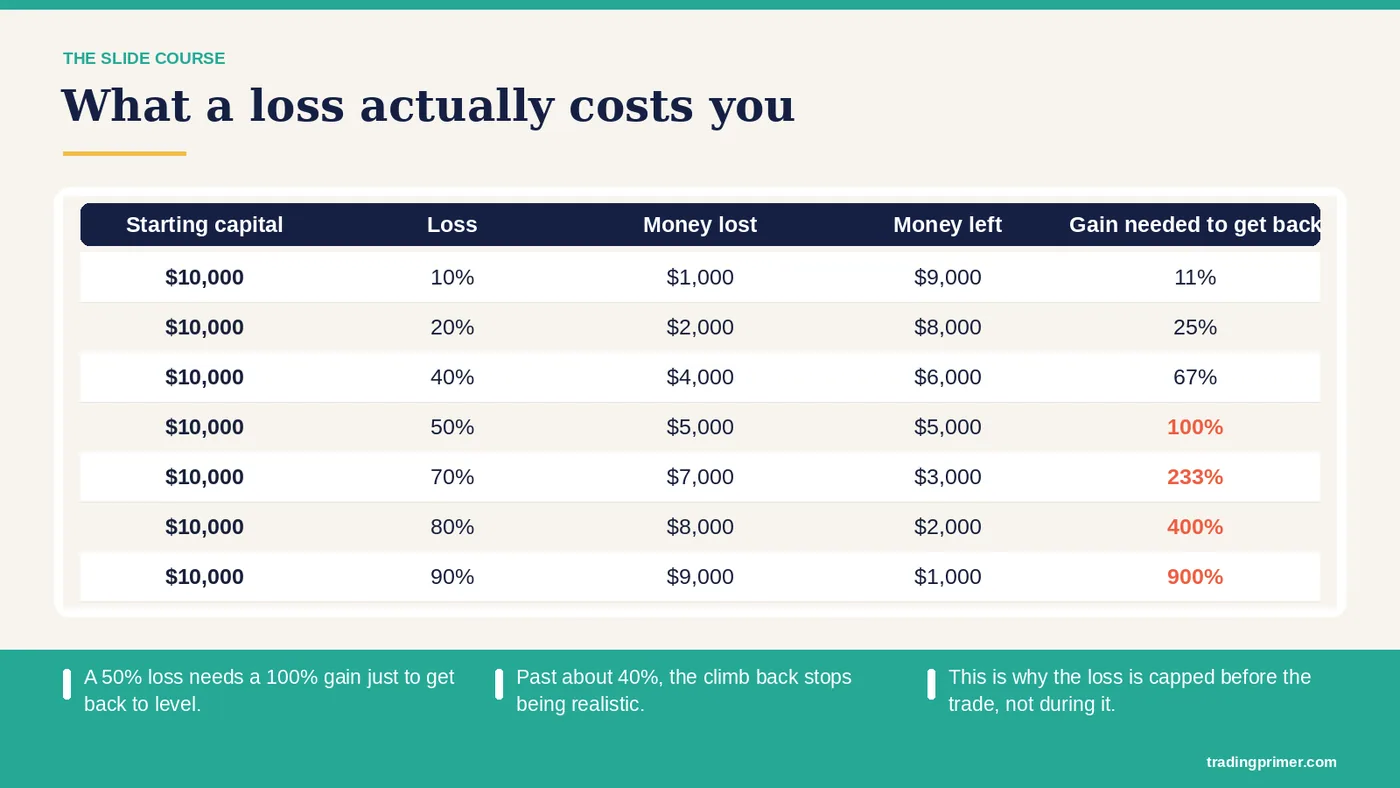
The sequence that matters. Decide the loss before the trade, size the position from that loss, then let the stop do its job. Reverse the order and the stop becomes a negotiation.
Slide 18 of 30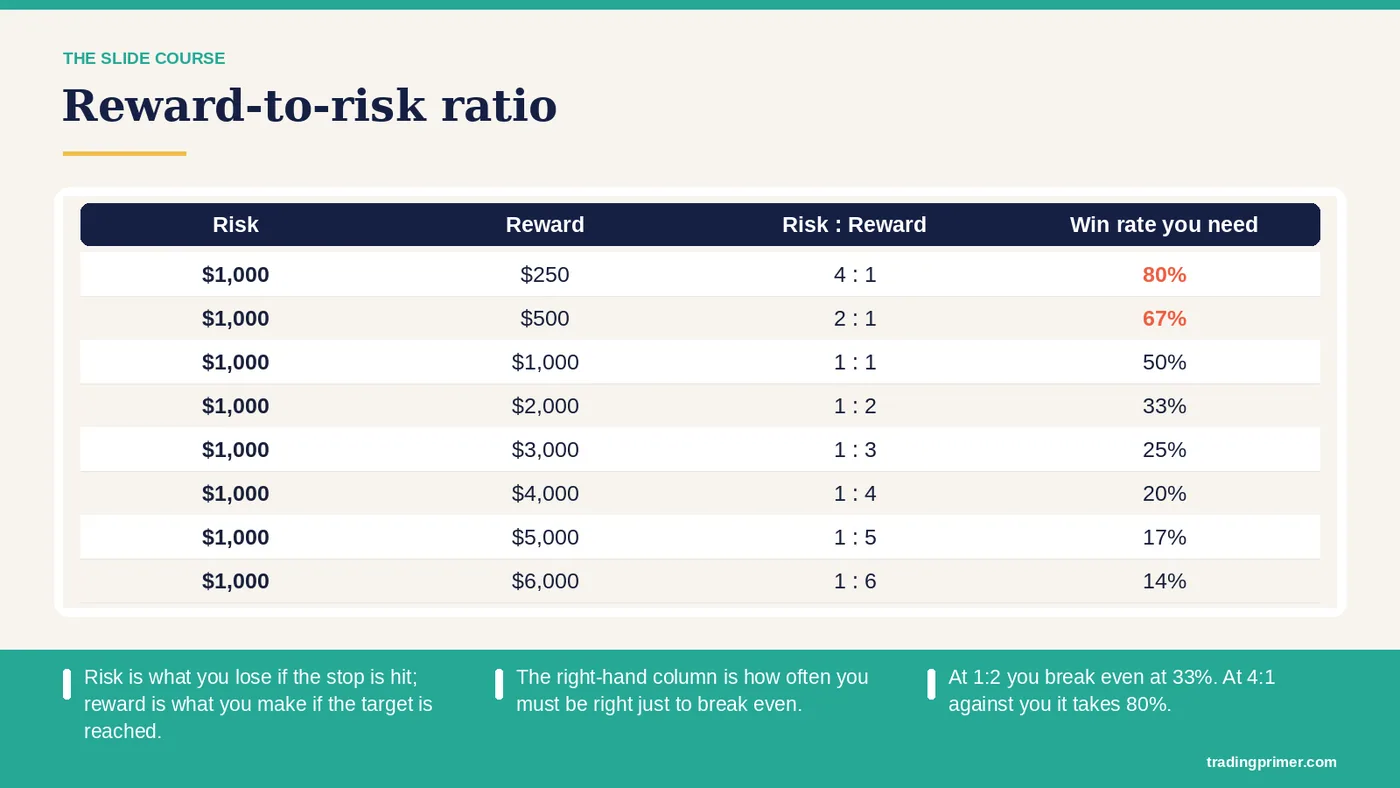
The table to read twice. Risk is what you lose if the stop is hit; reward is what you make if the target is reached. The right-hand column is the honest part — the win rate you need just to break even.
Slide 19 of 30 Tap to enlarge
Watch the ratio move. Same risk each time; only the reward changes. At 4:1 against you the trade needs an 80% win rate. At 1:6 it needs 14%. Nothing about your skill changed — only the trade you agreed to take.
Slide 20 of 30 Tap to enlarge
What a stop loss actually does. Price falls toward a line chosen in advance; when it touches, the loss stops at exactly the amount budgeted. That is the whole idea — a known cost instead of an open-ended one.
Slide 21 of 30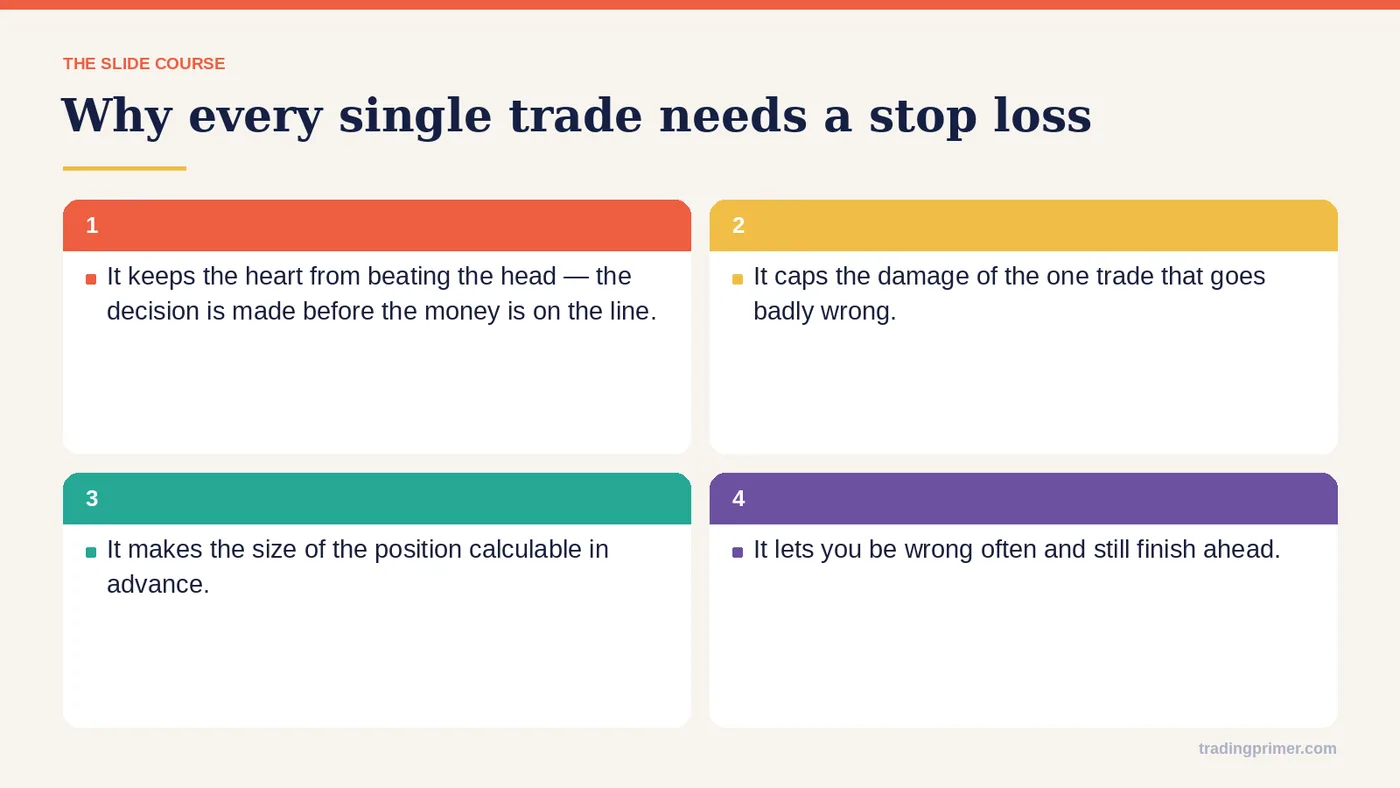
Why every trade needs one. It keeps the heart from beating the head, caps the one trade that goes badly wrong, makes position size calculable, and lets you be wrong often and still finish ahead.
Slide 22 of 30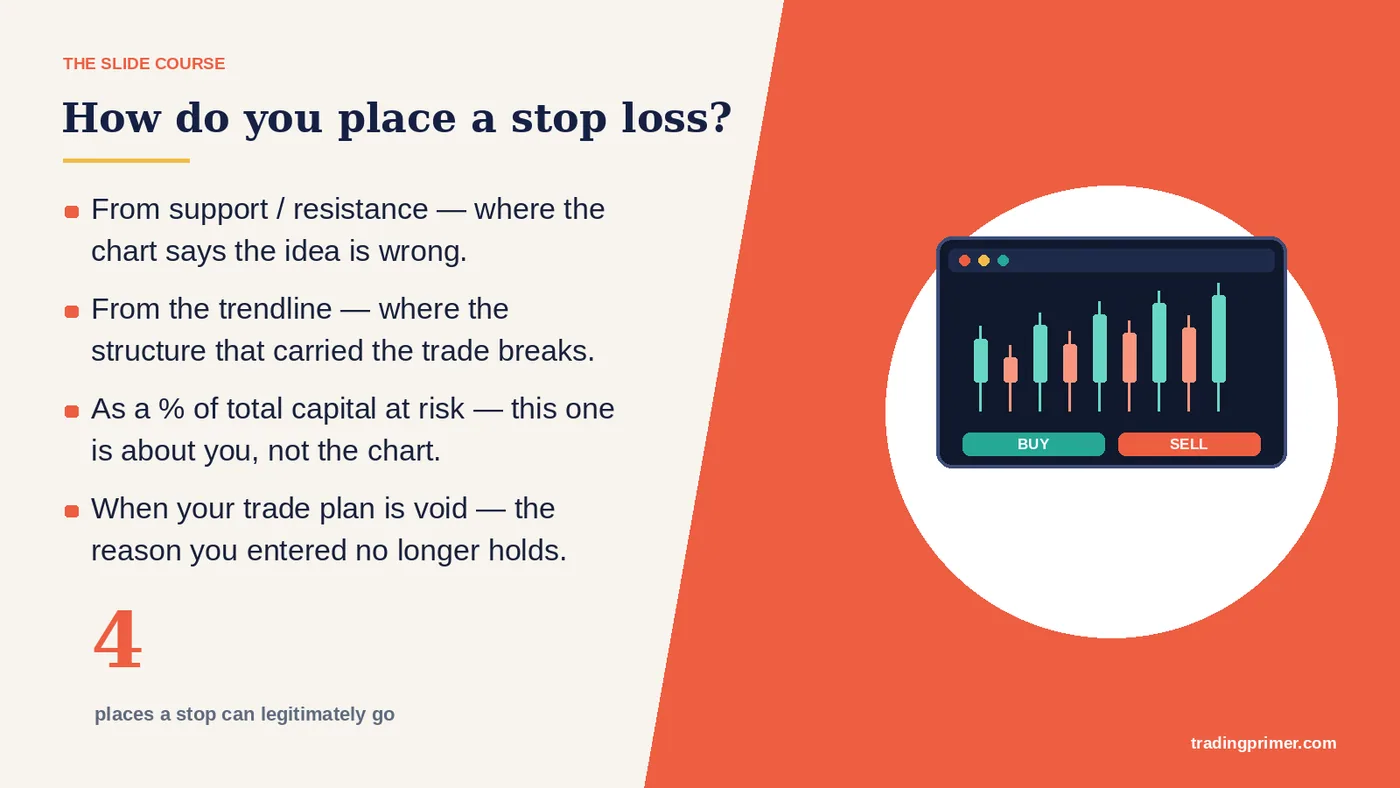
Four legitimate places — and only one is about you. Support/resistance, the trendline and "the plan is void" all read the chart. The percentage-of-capital option reads your account. Use the chart to set the level, the percentage to set the size.
Slide 23 of 30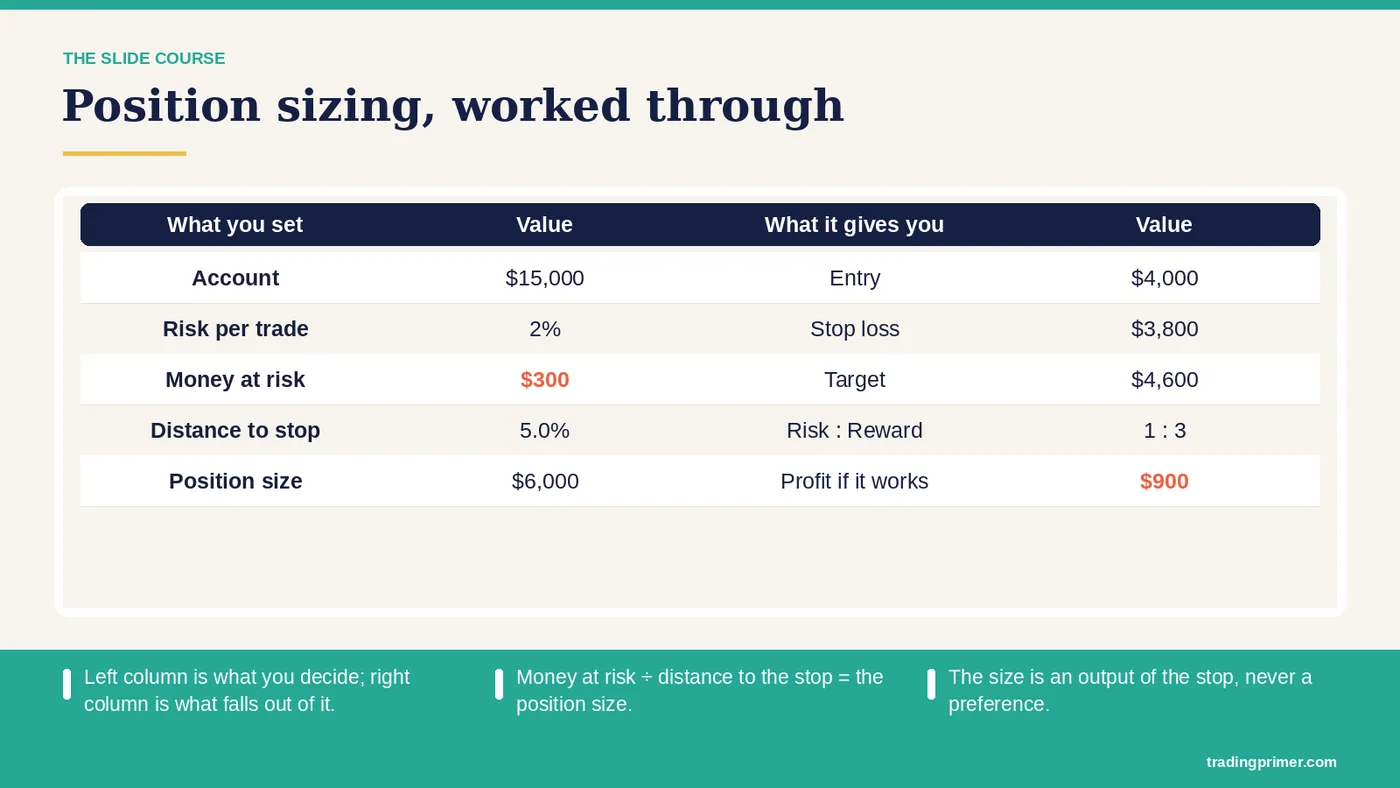
The sizing sheet, worked. $20,000 capital, 2% risk, entry 9,900, stop 9,200. The stop sits 7.07% away, so the position is $400 ÷ 0.0707 = $5,657. Note the trap: the 7.1% is stop distance, not account risk.
Slide 24 of 30 Tap to enlarge
Watch the size respond. The dollar risk never moves — only the stop does. Double the distance to the stop and the position halves. The size is an output of the stop, never a preference.
Slide 25 of 30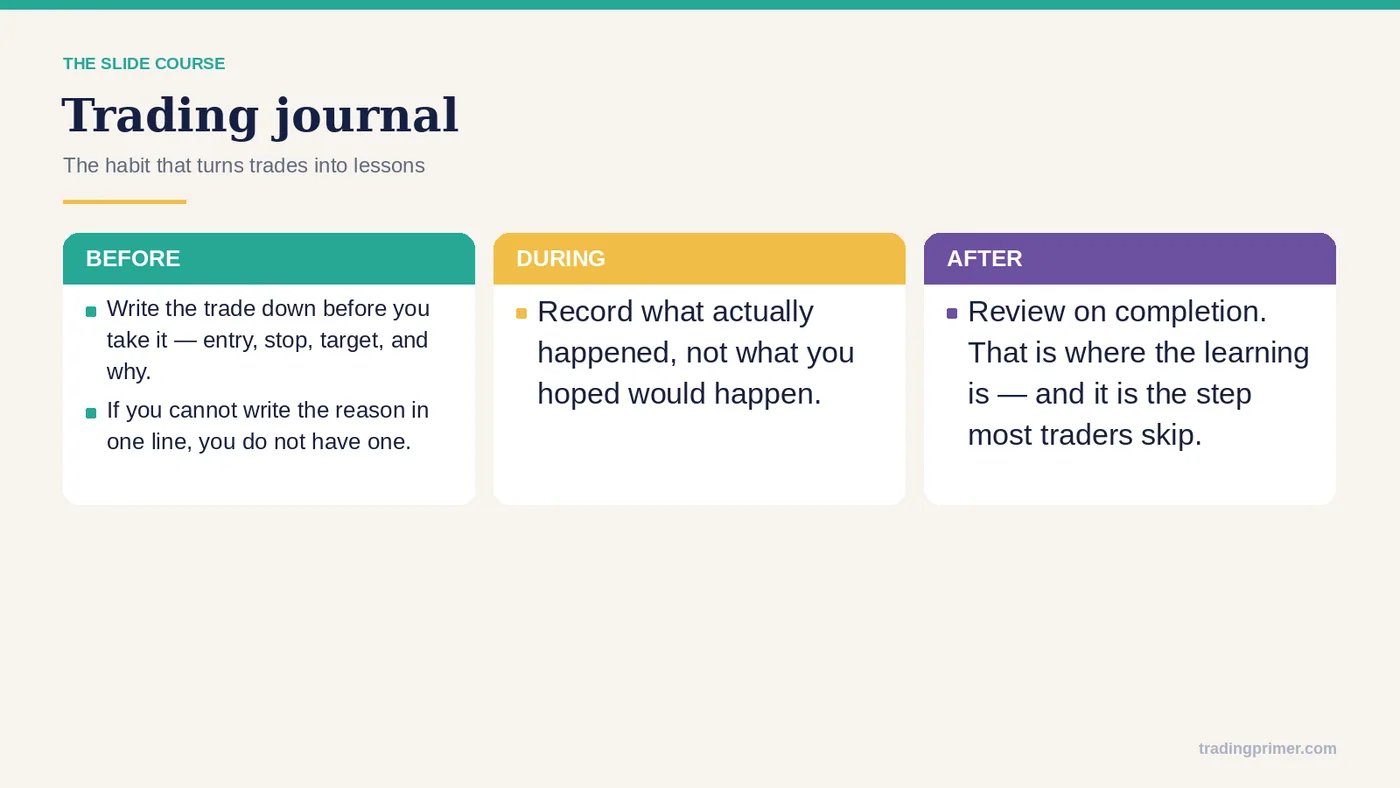
The journal. Written before the trade, filled in after it, reviewed on completion. It is the only reliable way to find the mistake you keep repeating.
Slide 26 of 30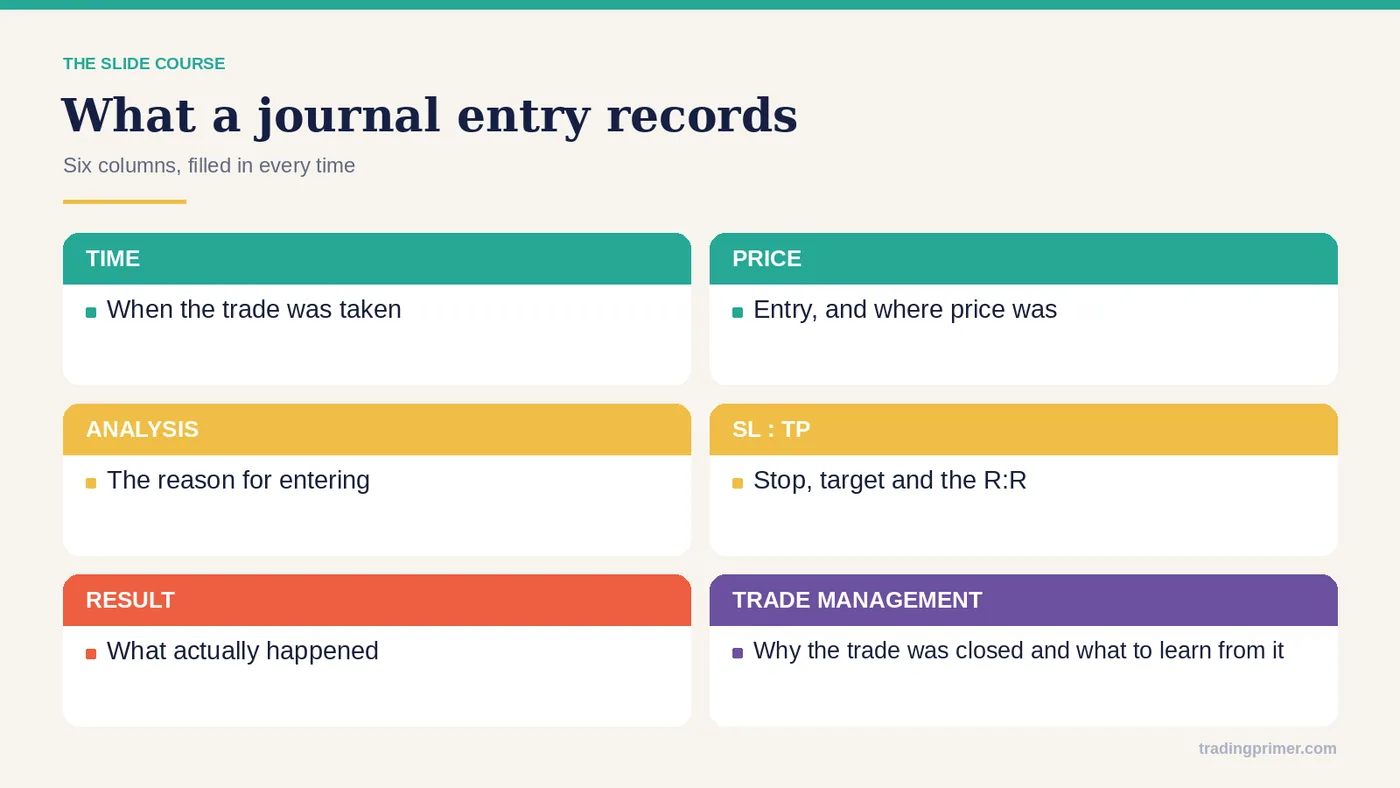
Six columns, every time. Time, price, the reason for entering, stop and target with the R:R, the result, and what closed the trade. The last column is where the learning lives.
Slide 27 of 30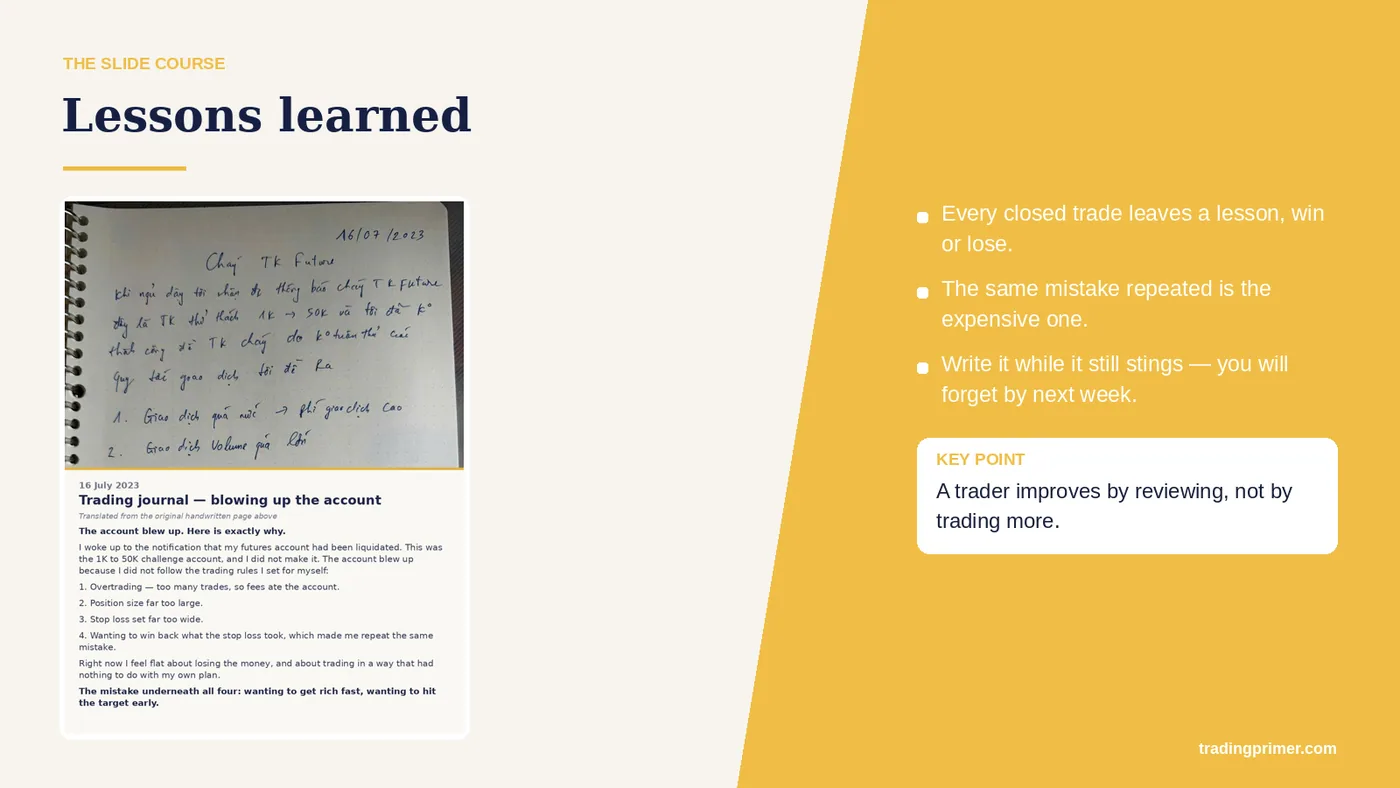
Lessons learned. Every closed trade leaves one, win or lose. Write it while it still stings — by next week the detail that mattered will be gone.
Slide 28 of 30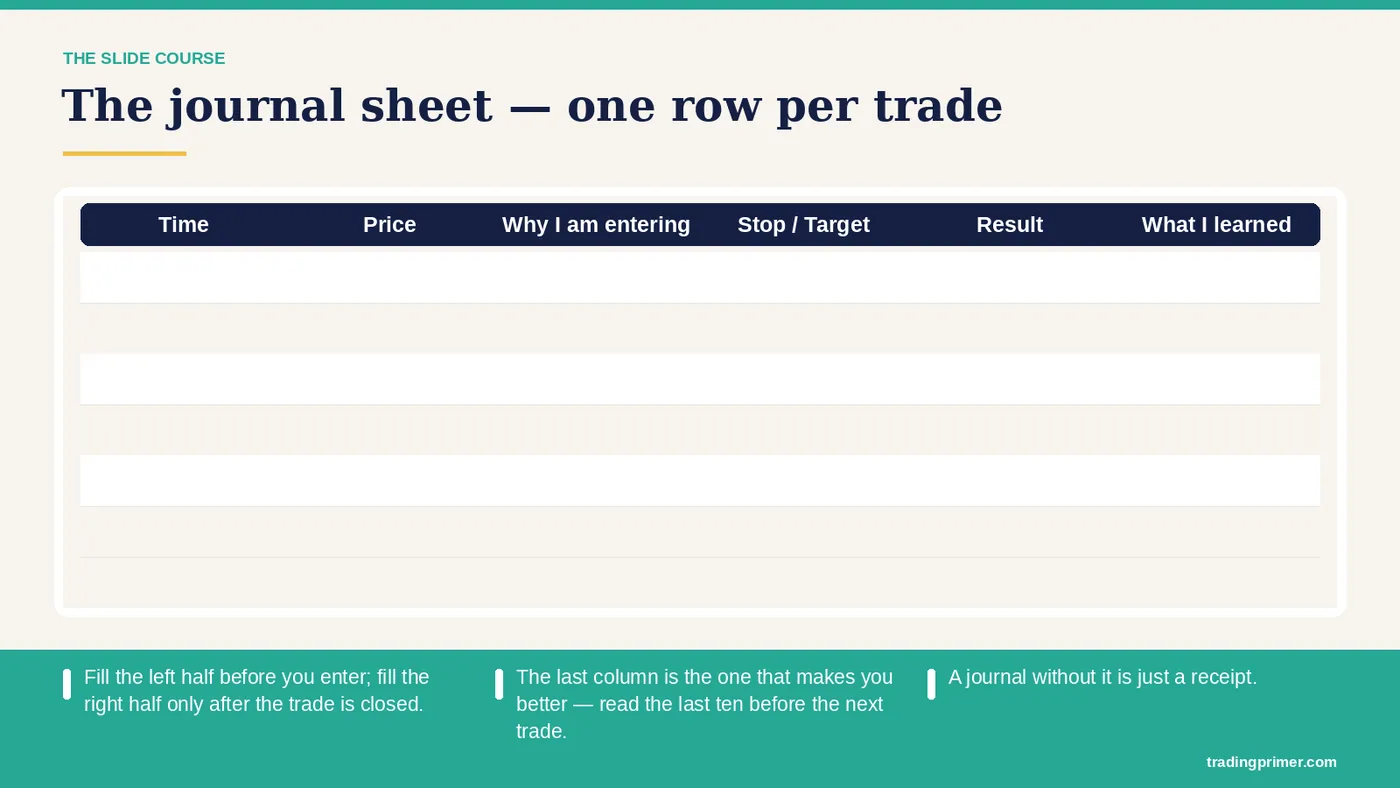
Review, then trade again. Read back the last ten trades before taking the next one, and look for the pattern in the losses rather than the excuse.
Slide 29 of 30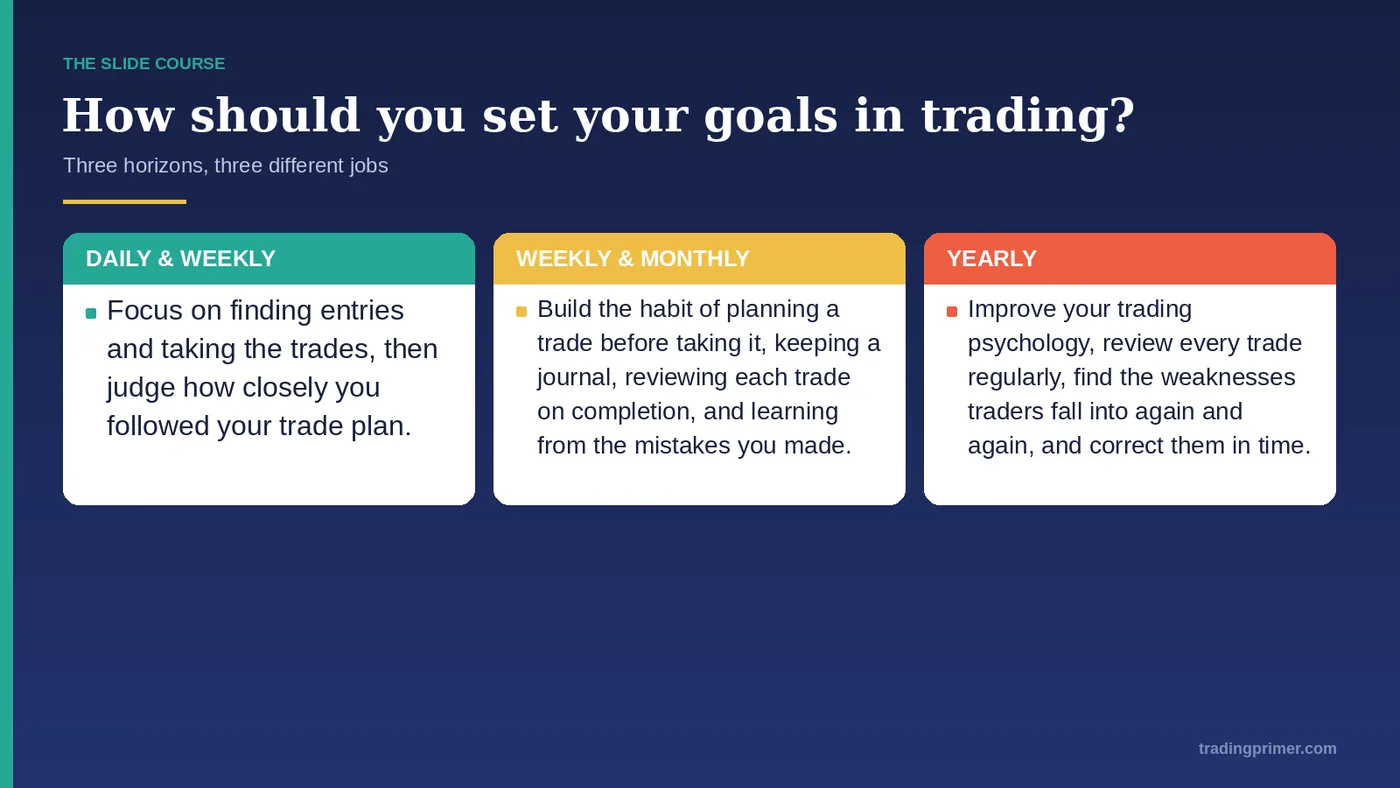
Three horizons, three jobs. Daily and weekly: follow the plan. Weekly and monthly: build the habits — plan, journal, review. Yearly: work on psychology and correct the weaknesses that keep coming back.
Slide 30 of 30What this part covers
10 topics, in order. Each link jumps straight to that slide.
Prefer it as a PDF?
The same ten parts, downloadable, to keep next to your charts.