Part 5 — Psychology and emotion
FOMO, revenge trading, the gambler's mindset and the emotional cycle of a trade. All 25 slides in the order the course teaches them — each one explained underneath.
PART V — TRADING PSYCHOLOGY.
Slide 1 of 25
Instead of setting unrealistic expectations, resolve to simply be patient and consistent — The chart carries the detail; the markings on it are what the course is teaching here.
Slide 2 of 25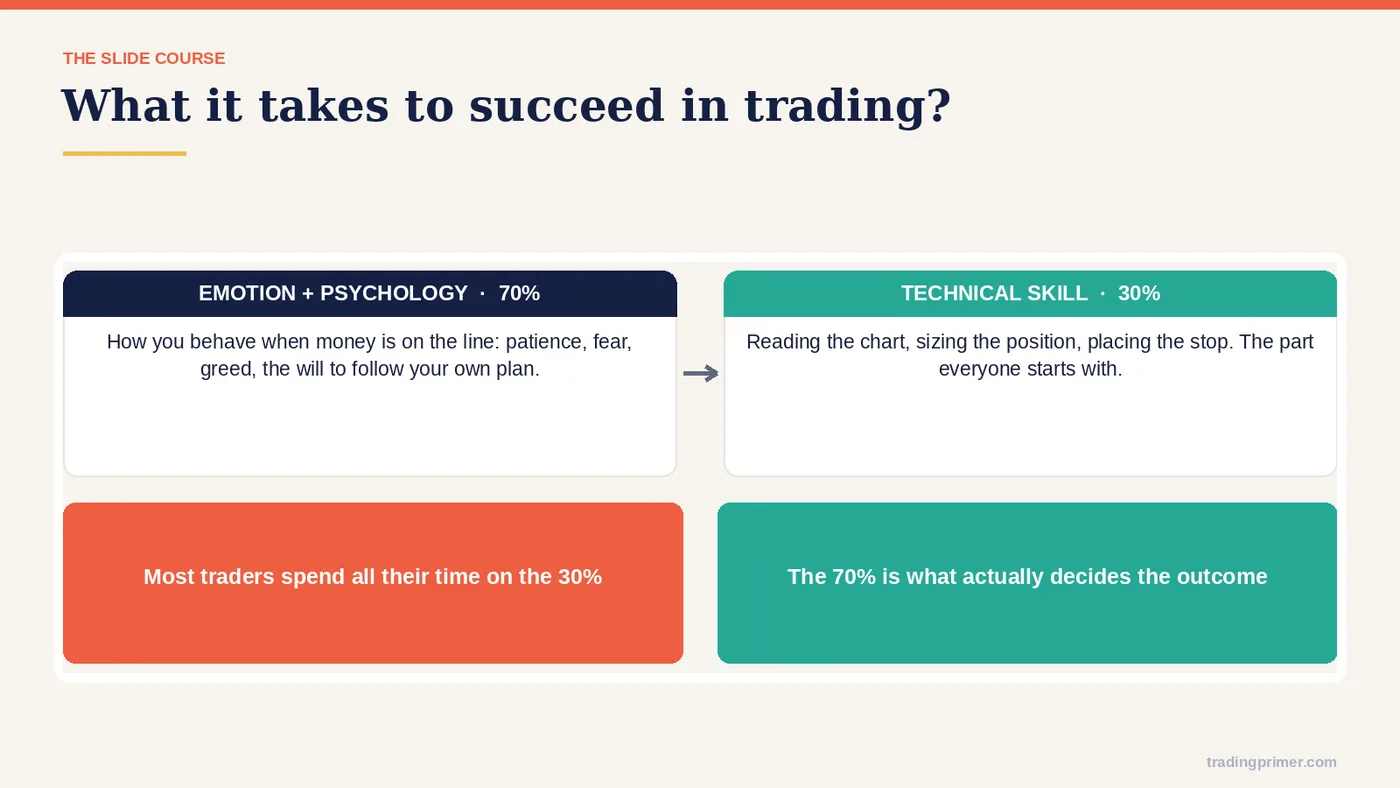
What it takes to succeed — in trading ???
Slide 3 of 25
The biggest mistakes — a trader makes. # 1: FOMO.
Slide 4 of 25
Two scenarios — appear. Push the position size. as high as it will go. Never skip a single. opportunity you spot.
Slide 5 of 25
Drop the Telegram and — Facebook groups you do not need. Your own trade plans. Do not lean too hard on other people's. calls. Trade what you see, not what you think. THE FIX.
Slide 6 of 25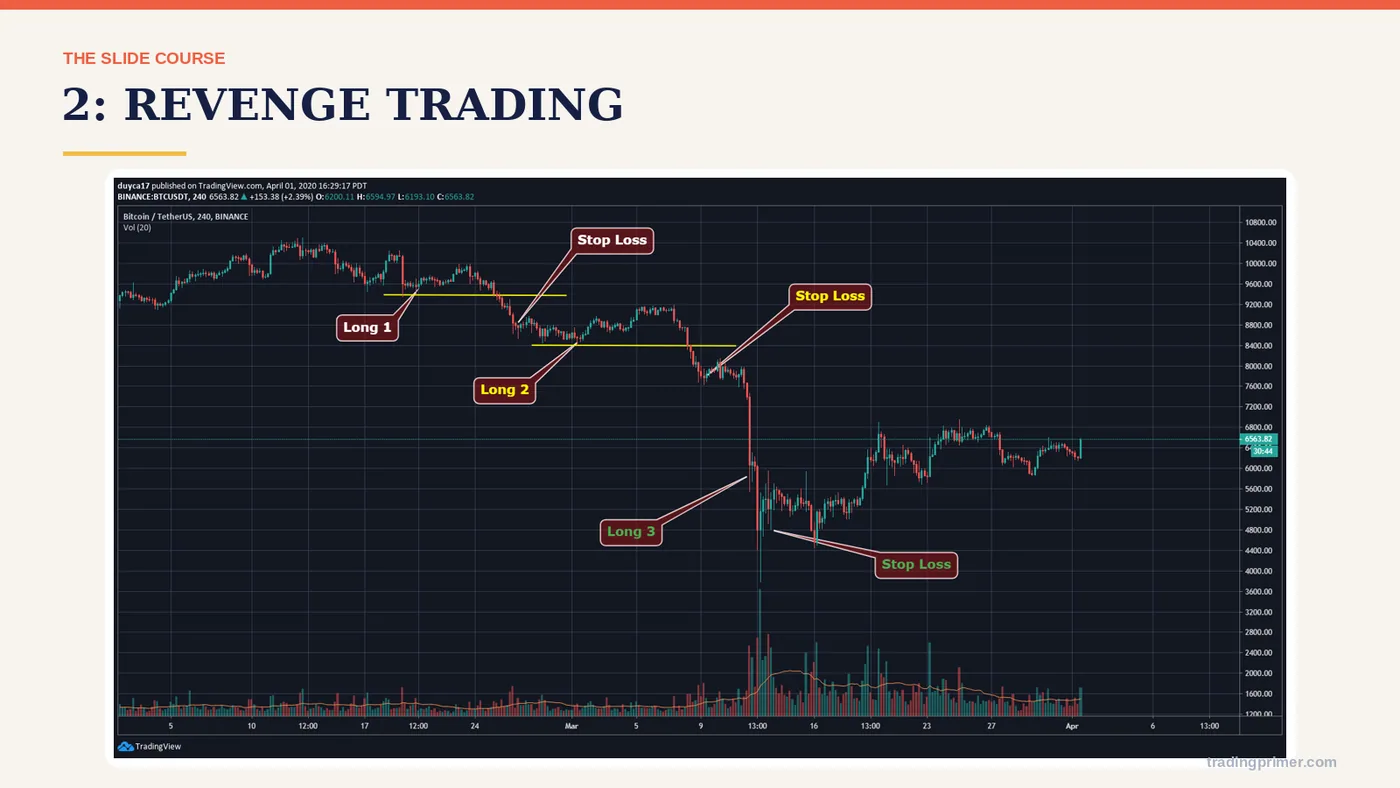
# 2: REVENGE TRADING — This is a habit, not a technique — the chart shows what it does to a run of trades.
Slide 7 of 25
# 2: REVENGE TRADING — a chart from the course deck. The markings on it are the lesson; read them left to right.
Slide 8 of 25
Cut the position size right down (to take emotion and psychology out of it) — Stop trading for a few days (set a maximum loss for one trading day). Switch to. trade DEMO. to get your confidence back. Drop the idea that. a trader has to take a trade. every day to make. a profit. THE FIX.
Slide 9 of 25
# 3: THE GAMBLER'S MINDSET — The chart carries the detail; the markings on it are what the course is teaching here.
Slide 10 of 25
# 3: THE GAMBLER'S MINDSET — a chart from the course deck. The markings on it are the lesson; read them left to right.
Slide 11 of 25
Treat every trade — as its own separate project. THE FIX. Stay disciplined about the stop loss. you already planned. Live to trade another day.
Slide 12 of 25
Emotion in trading — This is a habit, not a technique — the chart shows what it does to a run of trades.
Slide 13 of 25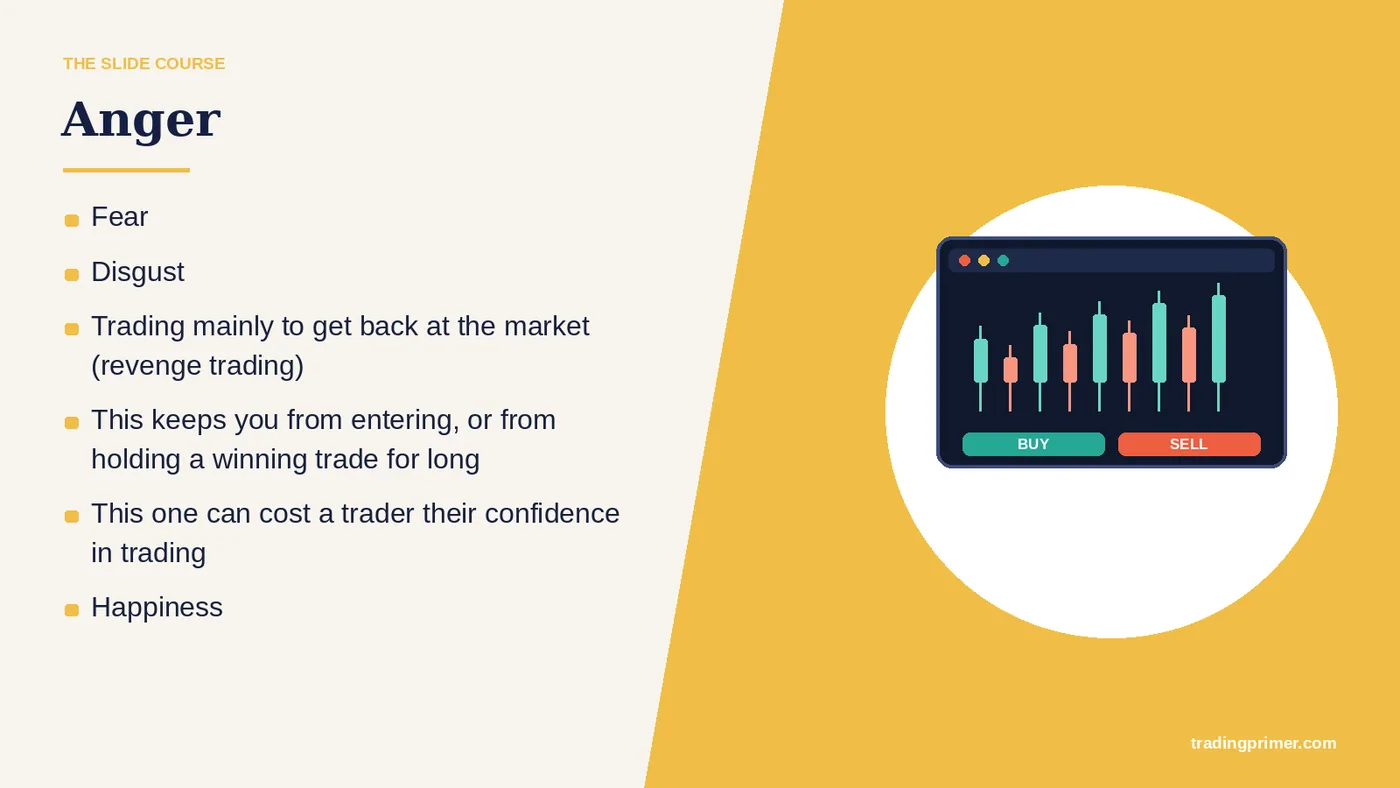
Trading mainly to get back at the market (revenge trading) — Anger. This keeps you from entering, or from holding a winning trade for long. Fear. This one can cost a trader their confidence in trading. Disgust. This state can lead to overtrading, or to taking too many trades at once. Happiness. This one usually makes the next decision harder — whether to enter, or when to cut. Sadness. This tends to hit when the market moves suddenly and you make a rushed decision that was never in the plan. Surprise.
Slide 14 of 25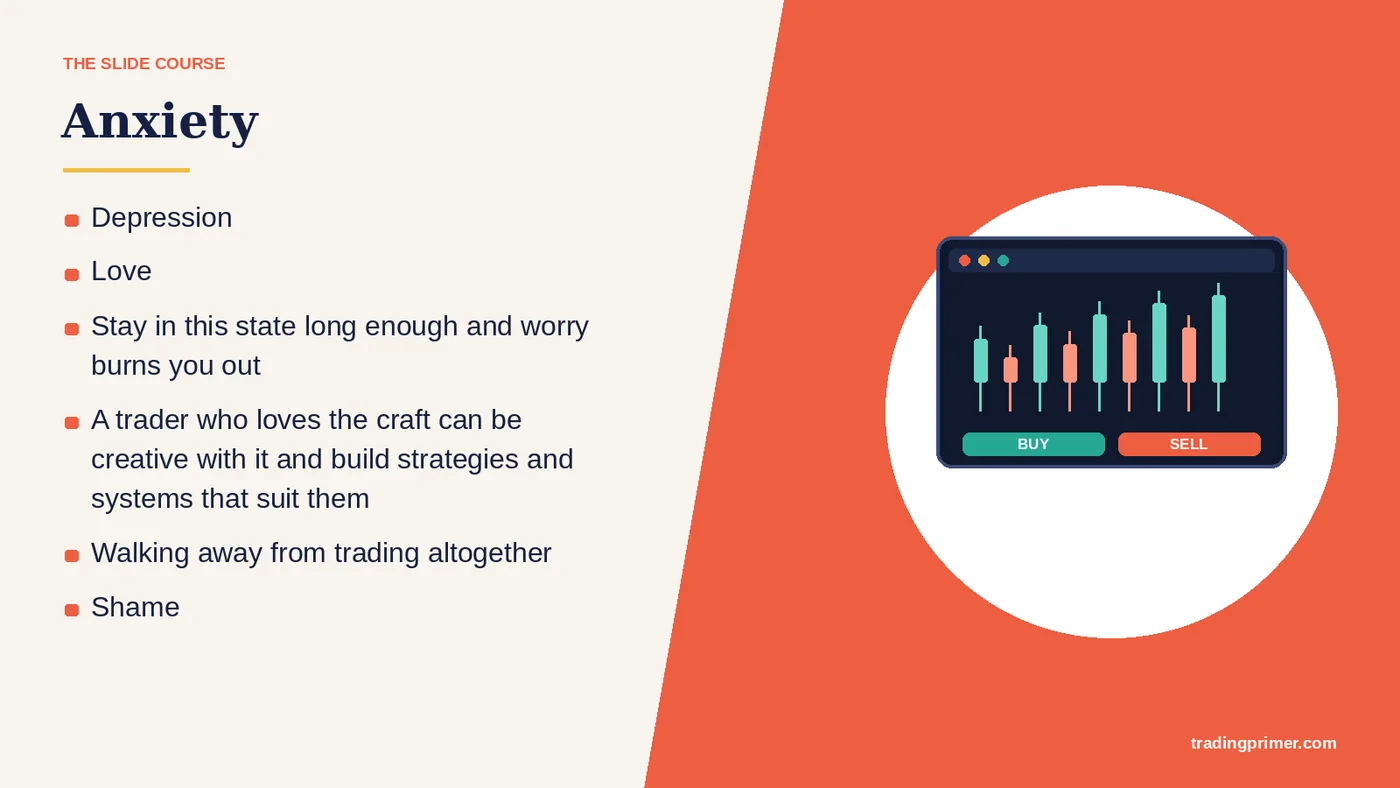
Stay in this state long enough and worry burns you out — Anxiety. A trader who loves the craft can be creative with it and build strategies and systems that suit them. Love. Walking away from trading altogether. Depression. A trader who looks down on the market or on other traders usually ends up punished by the market. Contempt. Trading big size, refusing to cut, always needing to prove the call was right — with no interest in actually becoming a trader. Pride. Avoiding other experienced traders, not daring to look at the account after losing trades. Shame. Paying more attention to what everyone…
Slide 15 of 25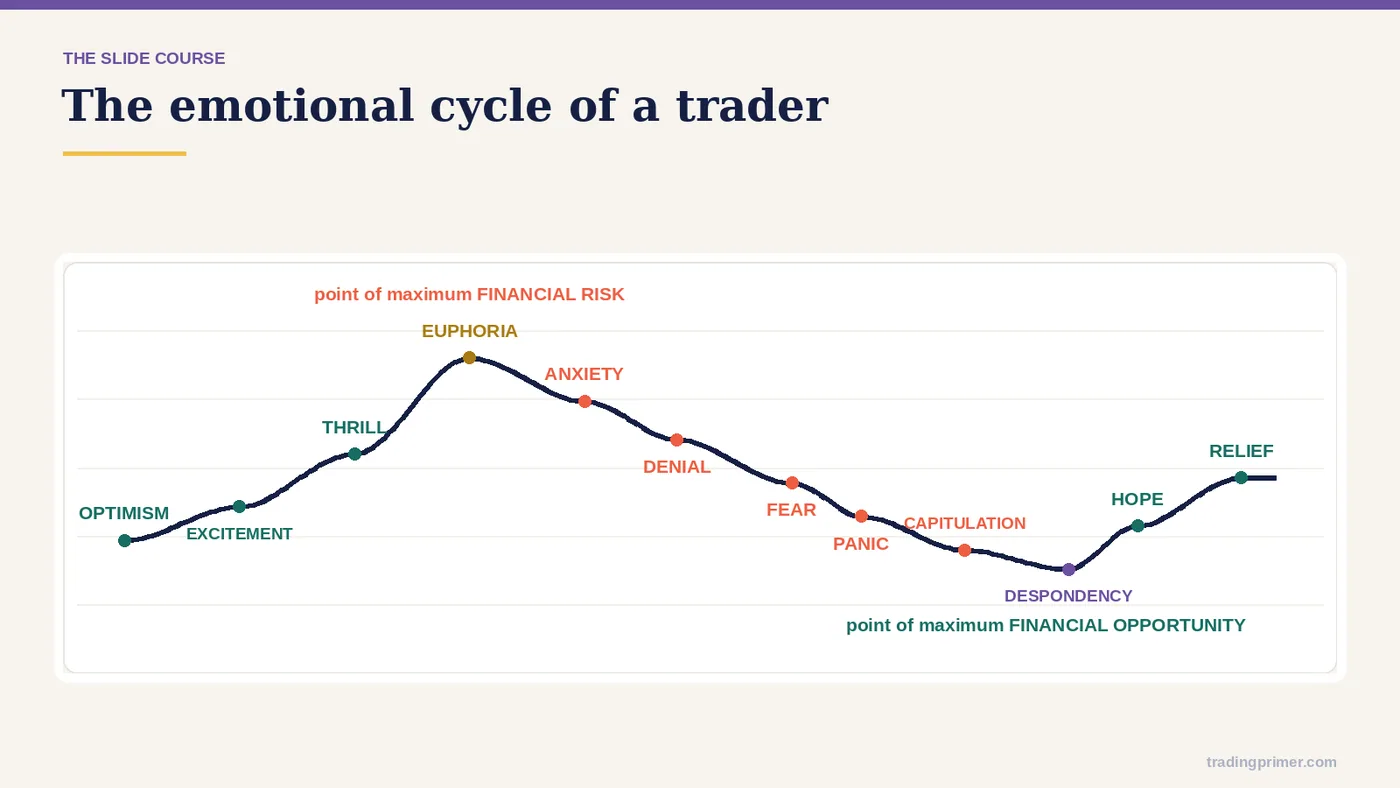
FEAR — HOPE. DOUBT. GREED. DISAPPOINTMENT. EXCITEMENT. The emotional cycle. of a trader.
Slide 16 of 25
Bad trading habits — driven by emotion.
Slide 17 of 25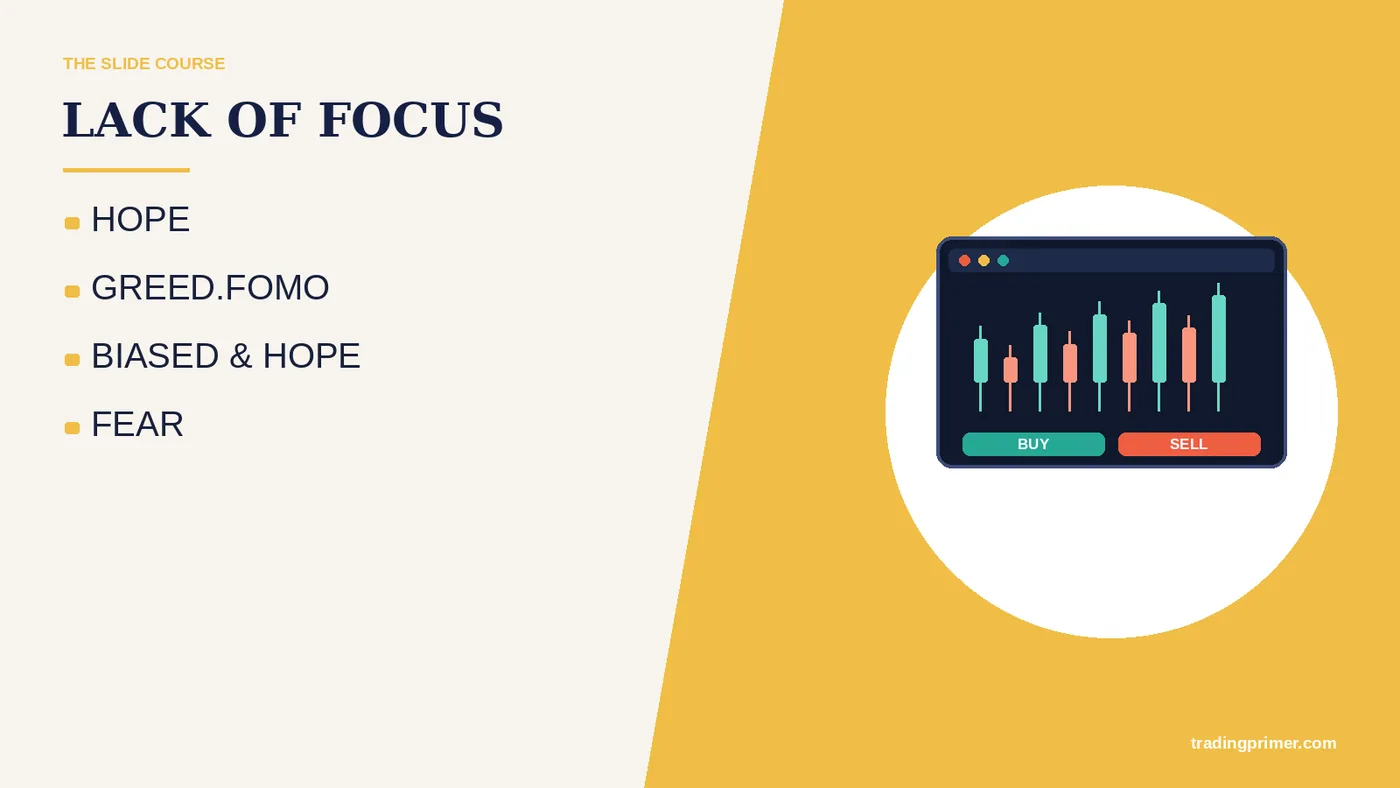
HOPE — GREED.FOMO. BIASED & HOPE. FEAR. LACK OF FOCUS.
Slide 18 of 25
The rules that never bend — for a trader.
Slide 19 of 25
The rules that never bend for a trader — a chart from the course deck. The markings on it are the lesson; read them left to right.
Slide 20 of 25
Why trades — fail.
Slide 21 of 25
How to hold on to your goals in trading — The chart carries the detail; the markings on it are what the course is teaching here.
Slide 22 of 25
5 — The chart carries the detail; the markings on it are what the course is teaching here.
Slide 23 of 25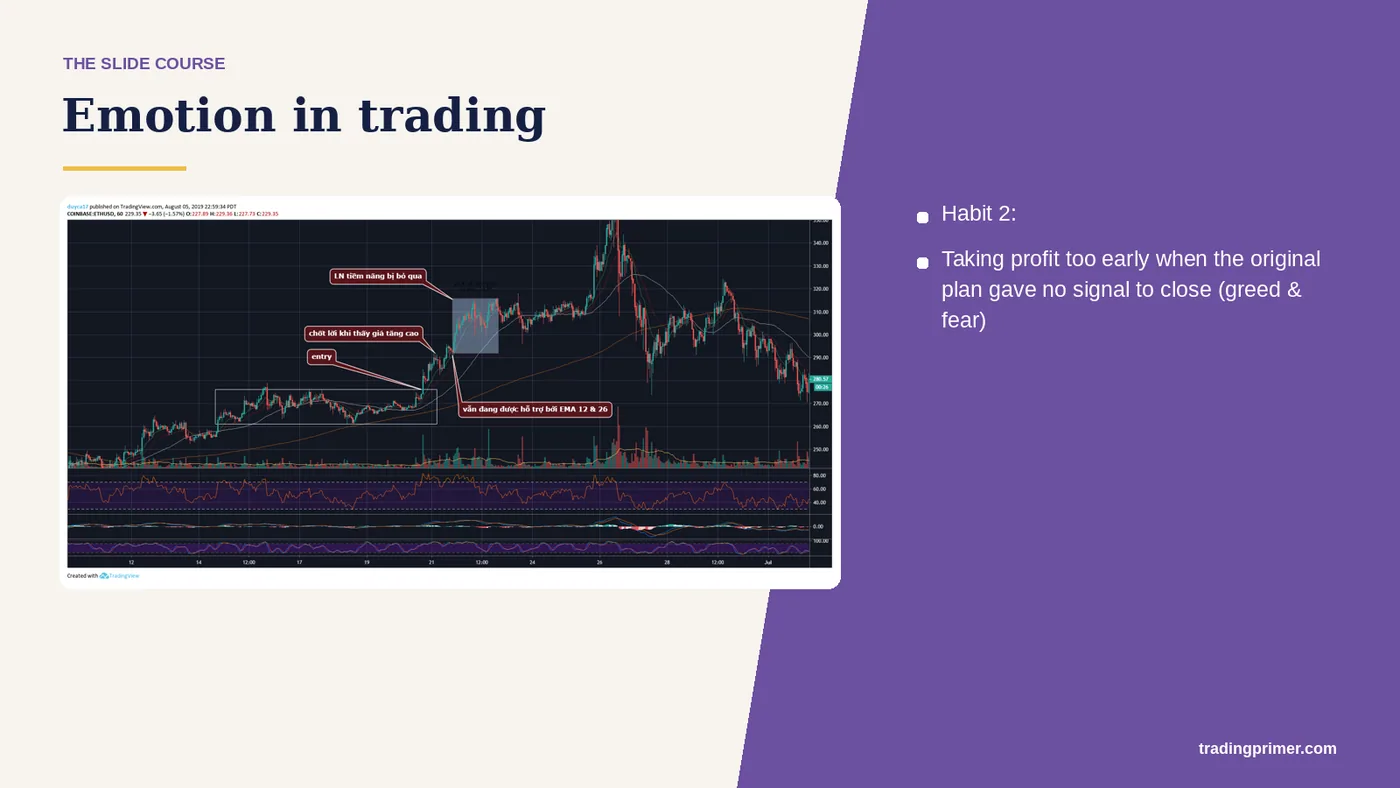
Emotion in trading — Habit 2: Taking profit too early when the original plan gave no signal to close (greed & fear).
Slide 24 of 25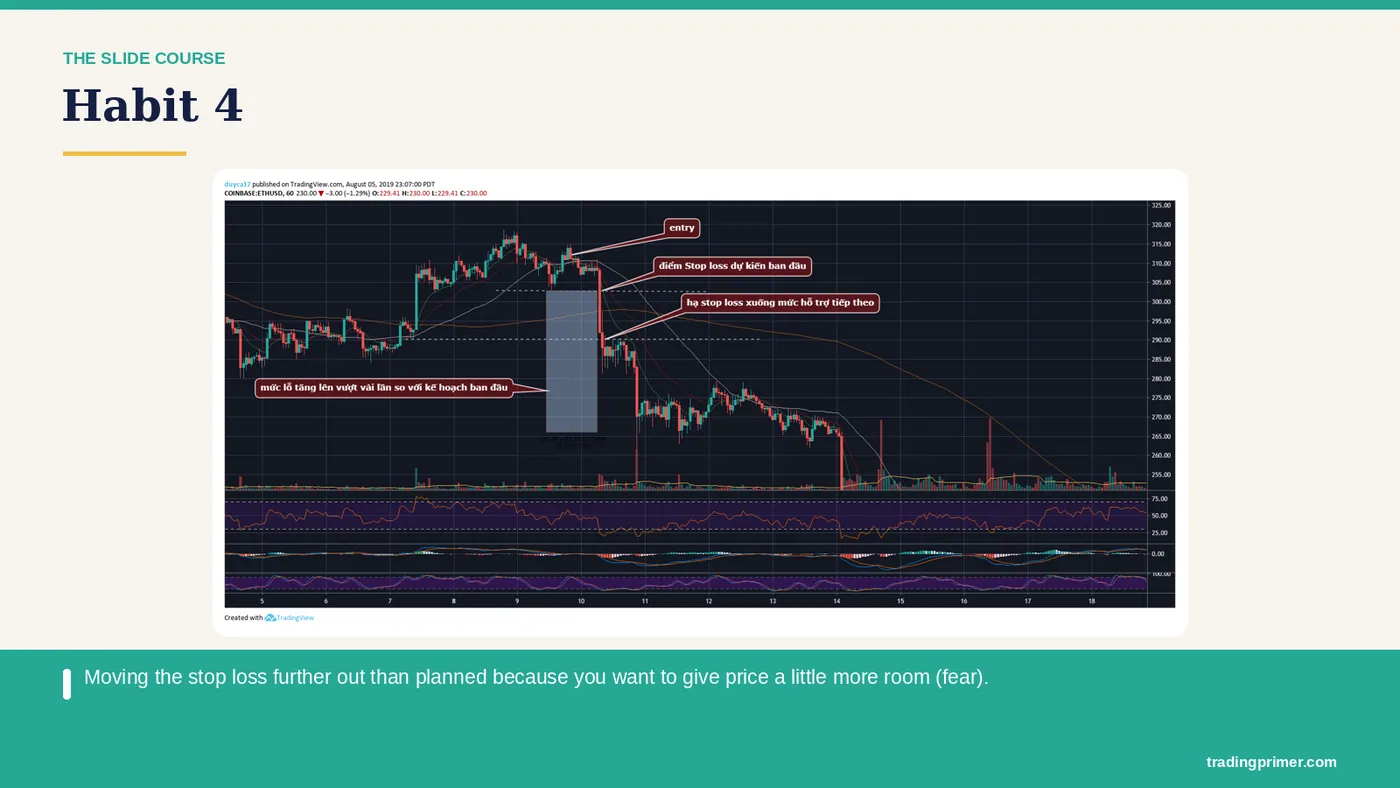
Habit 4: — Moving the stop loss further out than planned because you want to give price a little more room (fear).
Slide 25 of 25What this part covers
21 topics, in order. Each link jumps straight to that slide.
Prefer it as a PDF?
The same ten parts, downloadable, to keep next to your charts.